The Problem With The Shack

[et_pb_section admin_label=”section”][et_pb_row admin_label=”row”][et_pb_column type=”4_4″][et_pb_text admin_label=”Text”]

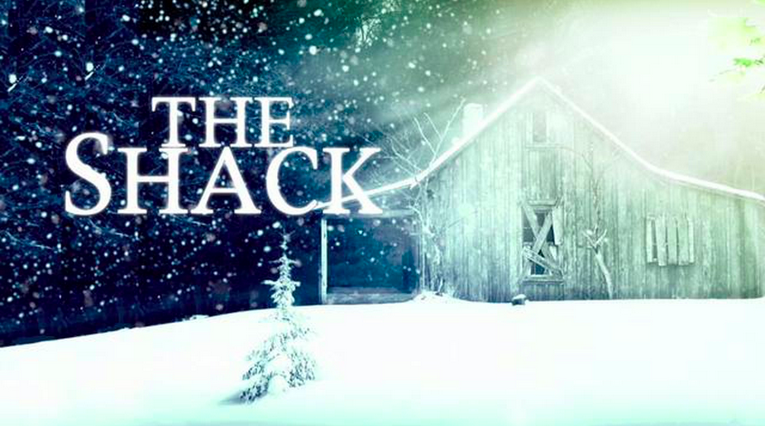
In recent days, and I expect there will be more to come, social media has begun to blow up with commentary about the new film The Shack.  Based on Paul Young’s (in collaboration with Wayne Jacobsen and Brad Cummings} book of the same name, published in 2007.  For those who are unfamiliar with the book, it is a fictional narrative documenting one man’s encounter with God after his young daughter was abducted and murdered.  As a result, Mack, the main character, has lost his faith in God, or Papa as his wife refers to Him.  The story deals with a wide range of emotions and problems but has recently come under significant fire due to concerns about heresy.  It is understandable, I suppose, that a book like this would get flak from the religious communityafter all, we do have external standards to maintain for the sake of appearances, and the seemingly heretical nature of this book threatens the spiritual life of people of all agesor at least that is what opponents would have you believe.  While I cannot say The Shack may or may not be the pinnacle of perfect theology, I find the rants of the religious to be tired, bored, and worn out.  Thus, we have the problem of The Shack.

I don’t actually care whether you read the book or watch the movie, nor whether you like it or not.  I am not the author, nor do I own a movie theaterI don’t get paid regardless of what you do related to the subject.  What I would like us all to avoid, however, is hysteria.  This book is probably no more nor less accurate than any other book one might write.  I say a lot about God and things spiritual in my books, but at the end of the day, He is really the only one who knows how true any of it is.  The only thing we can all agree on is that no two people, even of the same denomination, believe the same about everything.  We need to learn what to let slide and what to make a big issue over, so let us take a look.  The major concerns about this book, summed up as best as I can, fall into a few major categories:  The problem of sin, the nature of God, and eternal judgment versus Universalism.

Sin is a subject held very near and dear to most Christiansafter all, sin is the measurement we use to keep track of how righteous and godly we are.  The Shack challenges our views of sinnot because it actually challenges a single thing about sin itself, but about how God views and deals with it.  The book says things like “I don’t need to punish people for sin.  Sin is its own punishment, devouring you from the inside” (120).  People seem to freak out about this sort of thing, but it’s actually true.  Romans 6:23a says, “The wages of sin is death. . . .”  It literally IS its own punishmentThe Bible says it kills you!  How much more of a punishment do you need?  God’s job has never NEVER been about punishing us for sin, but delivering us from it.  Romans 5:7-9 says, “Very rarely will anyone die for a righteous person, though for a good person someone might possibly dare to die.  But God demonstrates his own love for us in this: While we were still sinners, Christ died for us.  Since we have now been justified by his blood, how much more shall we be saved from God’s wrath through him!”  Get thisGod isn’t worried about our sins because He, God the Father, demonstrated His love through Christ dying for us.  Even more scandalous is when we read that along with 2 Corinthians 5:19 which says, “That God was reconciling the world to himself in Christ, not counting people’s sins against them.  And he has committed to us the message of reconciliation.”  And while verses like Isaiah 59:2 say that our sins separate us from God, that is very different than the idea that God is the one doing the separating.  When we sin we pull ourselves away from God, which is why He had to send Jesus to fix the problem and reunite us with Him once and for all.   This heretical book which so cavalierly treats sin basically tells us what the Bible saysthat God isn’t counting our sins against us, and that He has come to rescue us from them, and from ourselves.  Huh—who would have thought it was so . . . scriptural.

Next comes God’s nature.  How can we attack that as displayed in the book?  That portraying God as three different people sets up some sort of weird cultish ideas that God is other than He really is.  But on p.101 the Father says, “We are not three gods, and we are not talking about one god with three attitudes, like a man who is a husband, father, and worker.  I am one God and I am three persons, and each of the three is fully and entirely the one.”  The concept of the Trinity is confusing enough, but the book seems to do it justice.  And to those who are then going to argue that the word “Trinity” isn’t in the Bible, neither is “internet”but that isn’t stopping it from existing, nor from you using it right now.  Next, the attack comes against the hierarchy of Godwith people getting upset that the book acts like the Father, Son, and Spirit are all equal.  Well, I have to say that there are only a bajillion verses where it says Jesus and God are one and alike and the sameand Holy Spirit is no different.  While yes, Holy Spirit reveals Jesus and Jesus points to the Father, the Father delights in His Son and in exalting the Sonso it kind of all works out in a big mess of God revealing Himself in many ways without some sort of hierarchyafter all, they are all the same being.  Do you have a pecking order inside your brain, or are you just you?

It gets better.  Opponents of The Shack complain that the author even goes so far as to limit the power of the God of the Universe, having the Father-God-character saying, “Mack, for you to forgive this man is for you to release him to me and allow me to redeem him” (224).  The funny thing is that Jesus said something similar to this when He walked here on the earth.  In John 20:23 Jesus says the following to his disciples, “If you forgive anyone’s sins, their sins are forgiven; if you do not forgive them, they are not forgiven.”  While certainly there is more to the story, in that mankind is redeemable (and already has been redeemed) outside of our ability to forgive one another, it doesn’t change the fact that when we do not forgive, there is something it changes in the realm of the spirit that holds and counts sins against othersand that matters whether we like it or not.  We really have no right to withhold forgiveness from others in light of what Jesus has forgiven us, but God still lets us make that choice.  If you call that limiting God, then so be itbut God limited Himself when He came to earth as a man.  God limited Himself of His own choice when He gave us free will.  So yes, scripturally, God has limitationsalbeit ones He set up to begin with.  But please noteit IS scriptural, not heretical.

The next major argument about this book is that it undermines the notion of eternal judgment, and as such is Universalist in nature.  Universalism basically ignores the idea of hell and/or eternal torment, saying that everyone gets to go to Heaven, because “Why would a good God sentence people to everlasting judgment?”  Well, it doesn’t actually say that at all, nor does it imply that, and unless you already have failed to understand what Jesus did on the cross to begin with, it should be abundantly clear.  To illustrate this point, let us look at what the book says about it, via part of a conversation Mack and Jesus have.

“They arrived at the door of the workshop. Again Jesus stopped.  ‘Those who love me come from every system that exists.  They were Buddhists or Mormons, Baptists or Muslims, Democrats, Republicans, and many who don’t vote or are not part of any Sunday morning or religious institutions.  I have followers who were murderers and many who were self-righteous.  Some are bankers and bookies, Americans and Iraqis, Jews and Palestinians.  I have no desire to make them Christian, but I do want to join them in their transformation into sons and daughters of my Papa, into my brothers and sisters, into my Beloved.”

“’Does that mean,” asked Mack, “that all roads will lead to you?”

“Not at all,” smiled Jesus as he reached for the door handle to the shop.  “Most roads don’t lead anywhere.  What it does mean is that I will travel any road to find you” (182).

Opponents have used the above passage to say that because Jesus says that he doesn’t care whether people are Buddhist or Muslim or whatever that it is Universalist because all roads lead to God and anything we do is fine.  This section doesn’t say anything of the sort, which an intelligent read would easily show, considering the very last thing Jesus says clarifies the entire rest of the conversation.  Jesus, both in the book and in reality, is interested in conforming us into His imagetransforming us to be like Him.  He isn’t concerned about titles, religions, or anything else because He transcends all of that.  I have a friend who meets occasionally with a woman who is in the New Age.  She has a spirit guide whose name is Jesus.  He has told her, on His own, that His name is also Living Water.  She told my friend this about Jesus—but has never read the Bible.  She doesn’t know that Jesus has revealed Himself in scriptures the same way.  Incidentally, Jesus doesn’t tell her to leave the New Age, but He is discipling her and drawing her closer to Him.  She has fallen deeply in love with Jesus, and He hasn’t tried to make her a Christian yet.  He is, however, turning her into His beloved bride as part of the church regardless of what label she applies to herself.  And yes, in scripture Holy Spirit is revealed as the Guide (John 14:26)hence, to some He reveals himself as their Spirit Guide because, as Jesus says in The Shack, he meets them on their journey.

The final, and possibly the most lame complaint of them all, is that the book is irreverent. I have to remind everyone at the end of the day this story is a work of fiction, a spiritual allegory right up there with The Chronicles of Narnia, Pilgrim’s Progress, and others.  The book expresses spiritual truths, but there are still fictitious elements contained thereinelements we would do well to simply ignore for the sake of theological purposes.  Is Holy Spirit a woman?  Is Father God a black woman?  Is Jesus an Arab?  Does it really even matter?  No, it doesn’tand those made-up details aren’t meant to create theological beliefs.  Rather, they are literary devices the author uses to make his point..  I’m pretty sure most people are smart enough to figure out the difference between fiction elements and truth, and if they cannot then they probably won’t do a great job of memorizing your theology either.  These characters are simple personifications of the matchless God of the Universe who transcends all forms, yet can take any form He chooses.  He decided to come to us as a man, and as a lion, and as a lamb.  He breaks boxes of limitations and undermines our sense of what is “proper” which, incidentally, was sort of a goal of The Shack.  The entire book was written in such a way as to purposefully push against our mental preconceptions to get us to think in new ways.   Jesus constantly went against the grain, so having the Godhead portrayed as book characters that do the same is really unsurprising, and actually keeps with His nature as revealed in Jesus.  1 Thessalonians 5:20-21 gives us a guideline of what to do with this book:   “Do not treat prophecies with contempt but test them all; hold on to what is good . . . .” We need to do with this subject what we ought to do with everythingeat the meat and spit out the bones.

We need to learn to be slow to speak in judgment as with the same measure we use it will be measured to us (Matthew 7:2)—and do we really want that?  Do we want the kind of treatment people are giving this matter when it comes our turn to have some big event or project?  Would we like it if people picked apart every detail of something we wrote or produced with an unforgiving eye and lacking even a modicum of grace?  It really is a shame.  I think people often don’t understand what goes into writing a book like this.  An author has to not only deeply grasp understand spiritual concepts, but we then have to put them in the mouths of characters who will share them, but at the same time make an effort to make the conversation sound natural and not cheesy or forced.  Then we have to have relevant plot points to make the book move forward, else we just have a big long conversation that no one really wants to read.  Somewhere in there artistic license comes into play, and we really need to start having more grace for that than I have seen some express thus far.  Besidesif you want a really good perspective about judgments, read pages 158-163 of the bookyou might learn something.

I originally tried to make this post funny when I started writing, but there comes a point to which trying to make religious ranting funny is just impossible.  It’s sad that people freak out so badly about things that I really wonder how they even enjoy life.  Do they enjoy it?  I remember back when the movie The Golden Compass came out, my mom called me, very concerned about both the film and for those who would watch it.

“They kill God in that movie!” she said.

“They tried that once.”  I replied.  “It only lasted about three days.”

We really need to take a deep breath and relax a little.  It is God’s job to keep us out of error thinking, not our job to police one another with fanatical fervor.  Yes, we would be wise to watch out for one another, but we need to take it down a few thousand notches and let people have a little more process and a little less control freak.  God is not threatened by our failures, nor is He put off by them.  He walks through them with us, helping and guiding us.  Dead Religion, of any denomination or spiritual belief, lays rules and regulations upon us that no one can possibly meet up with.  Jesus railed against it when he walked the earth, and unfortunately it seems not much has changed in that regard since.  The more we make rules and regulations trying to act as the Spirit of God for other people, the more we place them under the very bondage Jesus came to deliver us from.  It is for the sake of enjoying that freedom itself that Jesus set us free.

While reading back through the book to write this post, I was reminded of just how absolutely revelatory this book isand how far ahead of its time it is for many.  If you cannot see it clearly, let me explain.  Right now in the Earth our Heavenly Father is working a Goodness Revolution.  We have badly misunderstood His nature partly due to scriptural translationwhere verses get translated one way that says God does bad things when they could just as easily and accurately be meant another way.  Our Heavenly Father is trying to break through our wrong understandings and re-reveal Himself as the God of Love in the midst of our broken theology.  Thus, He uses books like The Shack to reveal His love to us.  If you actually let this book speak to you, somewhere between pages 100 and 230 you will find God sharing something of the depths of His nature, and you will learn and grow because of it.  This book is far more about revealing the absolute love of God in the midst of brokenness and painful circumstances than it is about anything else, but if you let it speak to you then God will be able to even more than that.

The problem with The Shack is not so much the content of the product itself; rather the problem with The Shack is that it serves as a mirror to reveal what is in our hearts in this hour—and unfortunately for some people what gets revealed is anger, judgment, and oppression.  Don’t let those people stop you.  If nothing else, this book and movie are a testone that each of us have the opportunity to pass.  Will you let yourself get offended by something that has the potential to touch countless lives, encourage the hurting, and draw people closer to God (and has already been doing for ten years)?  Or will you trust God to be big enough, knowing that He alone is the Counselor and Guidethe one who is responsible for transforming us into His likeness?

For those interested in reading the book, you can find it here:

[/et_pb_text][/et_pb_column][/et_pb_row][et_pb_row admin_label=”Row”][et_pb_column type=”4_4″][et_pb_code admin_label=”Free Ebook Code”]<script type=”text/javascript” src=”https://app.getresponse.com/view_webform_v2.js?u=B40ZB&webforms_id=6653905″></script>[/et_pb_code][/et_pb_column][/et_pb_row][/et_pb_section]


You Were Designed For A Unique Purpose

[et_pb_section admin_label=”section”][et_pb_row admin_label=”row”][et_pb_column type=”4_4″][et_pb_text admin_label=”Text”]

A few weeks back my wife and I watched the movie “Ms. Peregrine’s Home for Peculiar Children.” For those who haven’t seen it, the movie is essentially an X-men-style movie where varying individuals, known as “peculiars,” each have some sort of unique superpower. While watching, the Lord spoke a number of things to me, and I believe they will speak to you too.

As mentioned above, each of the children had their own superpower, and this meant that each had their own area or sphere of influence based on what their power governed. One child was responsible for helping grow plants–because her power was the ability to grow plants in seconds that would take months or even years in normal time. The Lord spoke a number of things to me during this movie, although “speak” is a relative term. He spoke to me as well as gave me a combination of visions and impressions that together carried a message.

What he shared was that like those children each have their own “special” something, I have been wondering recently if I have been fulfilling what I am designed to do. I have been questioning, “Am I doing what I have been called to do? Should I be doing something different?” You see, I don’t work with the homeless or evangelize people or minister to people in poor countries. I sit in my middle-class home, surf the internet, and write. But what the Lord showed me is that writing is exactly what I am called to do, at least here and now.

He showed me, “When people read the words on the page, words you wrote, something comes alive in them. When they read your books, they begin to hope. Faith is stirred up in them and they start to believe at a new level than they were able to believe before. A fire is alighted inside their hearts to trust me for new things. And that is what you have been called to do.” For me this is reassuring because I do wonder at times if I should be doing something “more meaningful” with my time. And yet, it turns out the thing I love doing (writing) is what God designed me to do!

I believe this is true of many of you–that you wonder and question if you should be doing something else instead of what you are doing now. Well, the word of the Lord to you (and to me) is to “stop should-ing on yourself.” You are designed with a purpose and have passions that cause you to fulfill that purpose.
1 Corinthians 12:15-30 says, “Now if the foot should say, “Because I am not a hand, I do not belong to the body,” it would not for that reason stop being part of the body. And if the ear should say, “Because I am not an eye, I do not belong to the body,” it would not for that reason stop being part of the body. If the whole body were an eye, where would the sense of hearing be? If the whole body were an ear, where would the sense of smell be? But in fact God has placed the parts in the body, every one of them, just as he wanted them to be. If they were all one part, where would the body be? As it is, there are many parts, but one body.”

If you have been feeling condemned because you haven’t fit into the very small and limited-scope ministry box the church has been telling you for years that “IT” is supposed to look like, be free. God has designed you for something different. You don’t “fit in” the normal way because that’s just not your way. It may be for some people, but you aren’t some people–you are you-niquely made to live your own life and to pursue your own passions. God is in the midst of them, because He has given you the deep longings and desires of your heart anyway. May you be free as you go out and live the way God created YOU to live–and don’t let anyone else hold you back from your purpose simply because it isn’t their’s. And if you are looking at trying to stop someone else, “Do not stop him,” Jesus said, “for whoever is not against you is for you” (Luke 9:50). Be at peace.

[/et_pb_text][et_pb_code admin_label=”Code”]<script type=”text/javascript” src=”https://app.getresponse.com/view_webform_v2.js?u=B40ZB&webforms_id=6653905″></script>[/et_pb_code][et_pb_comments admin_label=”Comments” show_avatar=”on” show_reply=”on” show_count=”on” background_layout=”light” use_border_color=”off” border_color=”#ffffff” border_style=”solid” custom_button=”off” button_letter_spacing=”0″ button_use_icon=”default” button_icon_placement=”right” button_on_hover=”on” button_letter_spacing_hover=”0″] [/et_pb_comments][/et_pb_column][/et_pb_row][/et_pb_section]

Dr. Strange Gospel Movie Supernatural Translocation Time Miracles HolySpirit SpiritualGifts

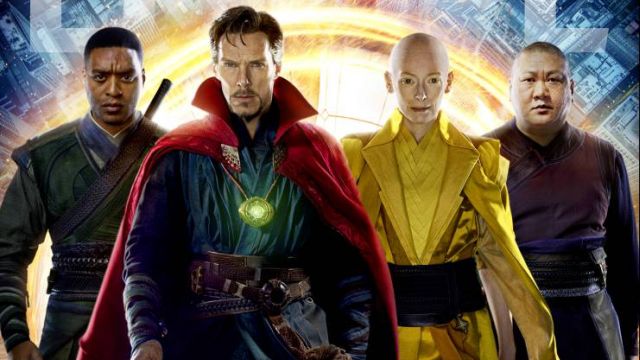
The Gospel According to Dr. Strange

***For those who haven’t seen the movie, be aware that***

***this article is filled with spoilers***

I saw the movie Dr. Strange this past month and really enjoyed it.  While one could argue there isn’t much spiritual value in a movie about sorcerers fighting one another, I respectfully disagree.  The movie was incredibly full of spiritual lessons, and if I can nerd-out for a moment, I suggest that there was less sorcery than one might expect.  Dr. Strange has a set of, well, strange rules for magic.  They are fundamentally based off of Qi, which is really just a term for the life energy that exists in everything (and which originated from God).  This in and of itself is reminiscent of old-time martial arts masters, not practitioners of magic, but at some point the lines get blurred.

https://www.youtube.com/watch?v=Fdhu8i_4olE

The movie begins with Dr. Steven Strange, a self-centered genius who loses everything he values, and as he sinks deeper and deeper into his plight he finds himself where many of us have found ourselves in hard times—on the search for salvation.  When he finally hits rock bottom he desperately reaches out to what is ultimately his savior—the Ancient One, a master of the magical arts.  This teacher is hard, but overall very good to him and teaches and guides him into deeper truth than he could ever have imagined.  When Strange meets the Ancient One, in search of bodily healing, she tells him that he can heal himself through the power of his spirit, which is accessed by belief.  She says, “You are a man looking at the world through a keyhole.  You have spent your life trying to widen it, to see more, to know more, and now, upon hearing it can be widened in ways you can’t imagine, you reject the possibility.”  She demonstrates to Strange, through power encounters, that what she is saying is true.  One of the key lines that stuck out to me was when Dr. Strange was searching for the truth—and she said, “You think this material world is all that there is.  Open up your eye.”

While the movie is steeped in a conglomeration of ancient Eastern mysticism, using arcane tools and referencing the Third Eye, this isn’t actually too different from what Paul prayed in Ephesians 1:18, “I pray that the eyes of your heart may be enlightened in order that you may know the hope to which he has called you . . .”  Dr. Strange has his own power-encounter and the eyes of his heart begin to be opened, much as God both has done and continues to do for each one of us as we learn and grow on our own spiritual journey.

As the movie progresses, a conflict between the Ancient One and one of her apostate disciples, Kaecilius, reaches its peak.  Kaecilius is hungry for power, and in order to gain as much power as he can, he steals and taps into forbidden arts that access power from the Dark Dimension—a spiritual realm that is ruled by Dormammu, a powerful and ancient being of evil who could be likened to Satan, although the movie seems to give Dormammu far more power than I think Satan actually possesses.

Dr. Strange Gospel Movie Supernatural Translocation Time Miracles HolySpirit SpiritualGiftsBut the conflict between Kaecilius and the Ancient One really played that out.  Kaecilius grew angry and lusted after power, most especially seeking immortality, after not only seeing his loved ones die, but discovering that the Ancient One was already tapping into the forbidden power herself to support her longevity and give her a form of immortality.  Unlike the immortality that Jesus gives us, this immortality was derived in almost vampiric fashion by stealing power from the Dark Dimension through the use of the forbidden magic.  As a friend recently stated, “Kaecilius made a much more compelling argument than most Marvel villains. It came down to one word: hypocrite.”  The Ancient One is the epitome of a hypocrite, telling others not to do the very thing she did, and yet somehow found it odd that people tried to follow what she did over what she said.  This has been the age-old struggle of the believer, and is why it is so important that we practice what we preach—because people usually will respond to what we do much more than what we say we believe, and if our words and actions don’t match, it destroys our credibility, as it did with Kaecilius and the Ancient One.

One of the things I found most irritating about this particular aspect of the movie was that while they did a good job of creating characters of generally good morals and showed the main character’s total transformation from a narrow-minded, self-involved snob to a selfless savior, they left no possibility of supreme goodness at work in the world.  The Ancient One laments that she is forced to use Dormammu’s power in order to peer through time and stop evil after evil, yet there was nowhere in the movie that suggested any Light Dimension of any sort that could supply this ability in another, more redemptive way, nor did it suggest she made any effort to find a better way.  Mordo, one of her top disciples, demonstrated significant insight when he pointed out that what we sow we reap—and that using the power of the Dark Dimension for good only created another cycle of evil—and this played out as Kaecilius turned toward darkness due to his anger at the Ancient One’s hypocrisy.  Strange ended up fighting in this battle as well.

In the same way that Stephen Strange fought darkness partly through his practiced abilities, we too have been given the same ability and same charge.  Hebrews 5:14 says, “But solid food is for the mature, who by constant use have trained themselves to distinguish good from evil.”  It wasn’t just his integrity and intelligence, but the fact that he had practiced with his powers time and time again.  Much like the spiritual gifts that we receive by the Holy Spirit, Strange made the most of the talents and abilities he possessed—both natural and supernatural.  This is an example of both wisdom and good stewardship, as God desires us to use wisdom in the ways we exercise both our spiritual and natural gifts and to use them to their full potential.  When the Master rebuked his one servant in Matthew 25:14-30, it was because he didn’t even attempt to make use of what he had been given, and in this movie Dr. Strange emulates what we can accomplish if we are faithful to put our gifts and abilities to good use alongside God’s blessing.

While there are so many incredible spiritual parallels in this movie, As this mystical battle progressed, Kaecilius once threatened Dr. Strange, saying “You’ll die protecting this world.”  In reality what Kaecilius said was in fact true—Dr. Strange took on a Jesus-like savior motif at the end.   Jesus said “I lay my own life down and I take it up again,” and Steven Strange, emulating Jesus in a moment of Christ-like clarity, did the same.  He laid his own life down again and again, letting himself be killed painful deaths hundreds of times in a time-loop of his own creation in order to force the Dark One to take his hands off Planet Earth forever.  One of the magnificent things about his choice is that he did not find victory through compromise, nor did he attempt to defeat Dormammu by stealing power like the Ancient One did.  His strength was in his newly developed virtue and integrity, along with his significant intellect and the abilities he had gained through rigorous practice.  Through one man’s selfless act he purchased salvation for the whole world.  Sound familiar?

One of the final lines I really appreciated in this movie was where the Ancient One first spoke to Dr. Strange.  “Dr. Strange, you think you know how the world works.  What if I told you the reality you know is one of many.”  And again, “Through the mystic arts we harness energy and shape reality.  We travel great distances in an instant.”  This movie hints about the seemingly fantastical abilities God gives us by His spirit, even to the point of physical translocation, supernatural healing, power over time, and more.  This movie encourages the watcher to open our eyes and minds up to a deeper spiritual reality than the physical touch-feel-see world around us.  What is more, I feel it speaks to a generation of people who are hungry for God’s power to touch their lives.  As the Body of Christ, we have been given a unique mandate to transform the earth and everyone in it, and to introduce them to God’s glory—His personality and Presence.  If you have not yet seen this movie, I encourage you to watch it with an eye for the spiritual messages that God wants to share with you, as I have only touched the surface of the depth of wisdom and revelation that Holy Spirit can draw out of this secular film.  I truly believe that even as it proclaims in Romans 1 that God speaks through all creation, and this movie is no different.  Sit back, grab some popcorn, and let God transform your heart as you enjoy watching Dr. Strange.


For those interested, after the movie comes out of the theaters it should be available for order and/or on-demand viewing here.


Related Articles:

The Gospel According to Shrek 2

The Gospel According to Kung Fu Panda 3


gospel according to kung fu panda3 intercessionprayer cross

The Gospel According to Kung Fu Panda 3

I can’t help but continue to be amazed at the way that God weaves the gospel message in Children’s videos.  Some of you may recall that I shared in a previous post about how I see the Gospel of the Kingdom displayed in Shrek 2 (here) but I found the same thing happening as I watched Kung Fu Panda 3 recently with my granddaughter Sophia.  As with the last movie, I found myself in tears as I watched a cartoon panda and his friends and family demonstrate the love of Jesus Christ in a powerful way (For those who haven’t seen the movie, this is the major scene at the end, so this article will be chock-full of spoilers).

The clip starts out with Po, the Dragon Warrior (panda) having just come to terms with the fact he can’t stop the enemy by conventional means, and if he doesn’t do something drastic he and his family and friends will all die.  He does the only thing left that he knows how to do—he sacrifices his own life to banish the evil warrior Kai to the Spirit Realm alongside him.  He is successful, but dies in the process.  This is such a clear picture of what Jesus did for us on the cross.  Colossians 2:13-15 says it this way, “When you were dead in your sins and in the uncircumcision of your flesh, God made you alive with Christ. He forgave us all our sins, having canceled the charge of our legal indebtedness, which stood against us and condemned us; he has taken it away, nailing it to the cross.  And having disarmed the powers and authorities, he made a public spectacle of them, triumphing over them by the cross.”  Knowing that the requirements of the Law of sin and death were set against us, and knowing that Satan would stop at nothing to bring the full payment of sin into our lives, He willingly laid his own life down on the cross, destroying Satan’s legal right to our lives and taking captive the power of death.kfpanda3

In the movie, Po defeats Kai in the Spirit Realm, also setting free everyone else that Kai had captured and killed, then resurrects himself and returns to the land of the living.  Scripturally, Jesus did the same thing.  After defeating the powers of darkness, even preaching to those who were already dead and setting them free (1 Peter 3:18-20) he rose again three days later.  Jesus said of himself in John 10:17-18 that, “The reason my Father loves me is that I lay down my life—only to take it up again. No one takes it from me, but I lay it down of my own accord. I have authority to lay it down and authority to take it up again. This command I received from my Father.”  Jesus, like Po, laid his own life down and returned to life of his own accord, having destroyed the powers of darkness that were set against those he loves (The clip cuts out just before showing this scene, but it is found in the movie).

This is such a touching picture of the immense love that Jesus has for us, but if you watch the clip below you will discover yet another spiritual message—that of intercession.  While we can all understand and agree that Jesus didn’t need our intercession to die and rise again, the above verses saying that he had the ability to do it himself, starting at 1:05 the clip shows us the power of intercession, and what happens when we come together as the Body of Christ in prayer.  2 Corinthians 10:4 says, “The weapons we fight with are not the weapons of the world. On the contrary, they have divine power to demolish strongholds.”  Our prayers are powerful and destroy works of darkness.  As we come together and command God’s Kingdom and will to be done on earth as it is already being done in heaven, we release a spiritual power that changes things and sets the captives free.  I encourage you to take a few minutes to watch the clip below and let Holy Spirit quicken these messages in your hearts as you watch Jesus speak His Gospel of life directly to our children in Kung Fu Panda 3.

https://www.youtube.com/watch?v=RXBS4K4oSsE

Author’s Note:  The clip was edited in a few parts leaving the scenes slightly choppy.  The entire DVD can be watched online or ordered at the following links:  Watch       Order


Related Articles:

The Gospel According to Dr. Strange

The Gospel According to Shrek 2

The Gospel According to Shrek 2

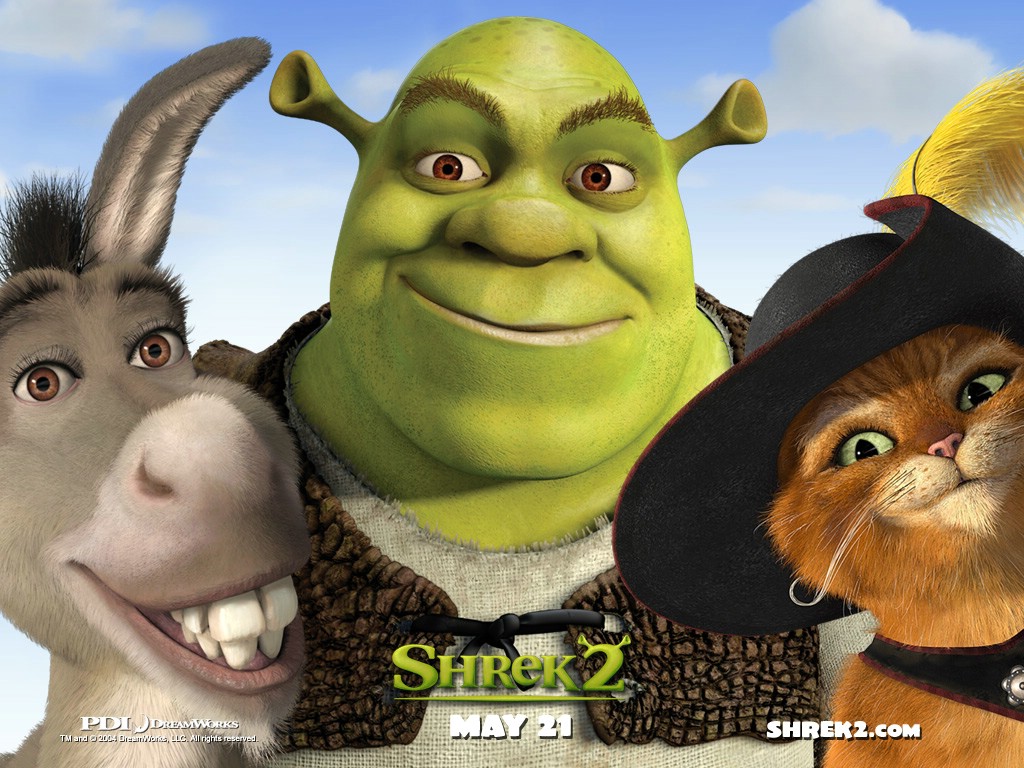
My grandkids had Shrek 2 playing the other night, and while I don’t like to re-watch movies much, I sat down with them for a bit to watch, and **spoiler alert** the part playing was toward the end where Fiona and Prince Jerkface (aka Prince Charming) were dancing . Shrek is getting ready to rescue Fiona from the evil fairy godmother, and as I watched, I couldn’t help as tears streamed down my face.

The first few seconds I didn’t understand why I was crying, but as I watched it quickly became clear–This section of the movie is filled with love demonstrated by heroic sacrifice. From Mongo the Giant Gingerbread to Puss in Boots putting themselves at mortal risk (and one of them dying) to stop the soldiers and give Shrek time to rescue his wife to Shrek himself and how he went to any and every length to save his bride, Holy Spirit was nudging my heart that Shrek is a picture of Jesus.

Jesus, like Shrek, wasn’t the best looking, as it says in Isaiah 53:2, “He grew up before him like a tender shoot, and like a root out of dry ground. He had no beauty or majesty to attract us to him, nothing in his appearance that we should desire him.” Shrek didn’t have good looks, and even when turned into a human he was plain at best. He didn’t make himself attractive so we would want him because of his physical beauty, but because of his love.

On the other hand, Satan, like Prince Charming, was the picture of beauty. “You were the seal of perfection, full of wisdom and perfect in beauty. You were in Eden, the garden of God; every precious stone adorned you: carnelian, chrysolite and emerald, topaz, onyx and jasper, lapis lazuli, turquoise and beryl. Your settings and mountings were made of gold; on the day you were created they were prepared. You were anointed as a guardian cherub, for so I ordained you. You were on the holy mount of God; you walked among the fiery stones. You were blameless in your ways from the day you were created till wickedness was found in you” (Ezekiel 28:12b-15).

Prince Charming was just that–a charmer. He was all about appearance, power, and selfishness, laying down nothing of himself but expecting others to fall at his feet. Shrek wasn’t willing to let his wife be taken away by this wolf in sheep’s clothing, fighting his way into a castle to save her.

It might seem silly, but there is something so incredibly moving about the scene when you watch him and his loyal friends surmount every obstacle to reach their goal. It is amazing to me how God weaves the gospel message in and through everyday life, and how something as simple as a children’s movie, one that includes magic potions and fairy spells—things that usually don’t strike us as “godly”, demonstrates so clearly the great love that Jesus has for us, and that he stopped at nothing, laying down his own life to unite with us once again.

Watch below and be touched by God’s immense love for you.


To watch the whole movie, select the photo below:

Related Articles:

The Gospel According to Dr. Strange

The Gospel According to Kung Fu Panda 3

Privacy Preference Center