Jesus Loves to Heal the Broken – Ukraine 2025
[et_pb_section][et_pb_row][et_pb_column type=”4_4″][et_pb_text]In my previous article (A Prophetic Warning at the Moldovan Border) I shared about how God both warned the Overseas Missions team about the Moldovan border crossing and also walked us through everything we needed to resolve the matter in real-time. But that was just the process to arrive in Ukraine. Once we were there, the real work began. And when I say “work”, it wasn’t physically challenging for most on the team, nor was it fast-paced such that it would be hard for someone to keep up. It was really more about steadily and persistently being involved on a daily basis, and as we did that, Jesus healed people every day. And why did He do this? Because Jesus loves to heal the broken.
A favorite passage of mine is Isaiah 42. The entire passage is a prophecy speaking of Jesus, but I want to highlight a few specific verses, Isaiah 42:3, 6b-7, which says:
“A bruised reed he will not break, and a smoldering wick he will not snuff out. . .
. . . I will keep you and will make you to be a covenant for the people and a light for the Gentiles, to open eyes that are blind, to free captives from prison and to release from the dungeon those who sit in darkness.”
I love thinking of Jesus’s personality in this context. He is so gentle and kind to the hurting and broken that he won’t further injure those who are already injured, and those who are nearing the end of their ability to cope, or even the end of their life, He will never push them further or finish the job. He is a light to all mankind, heals those with any physical malady, brings freedom to those in captivity, and to those in any form of darkness, whether physical, soul, or spiritual, He sets them free. And this is exactly what the OM team saw Him do again and again each day in Ukraine.
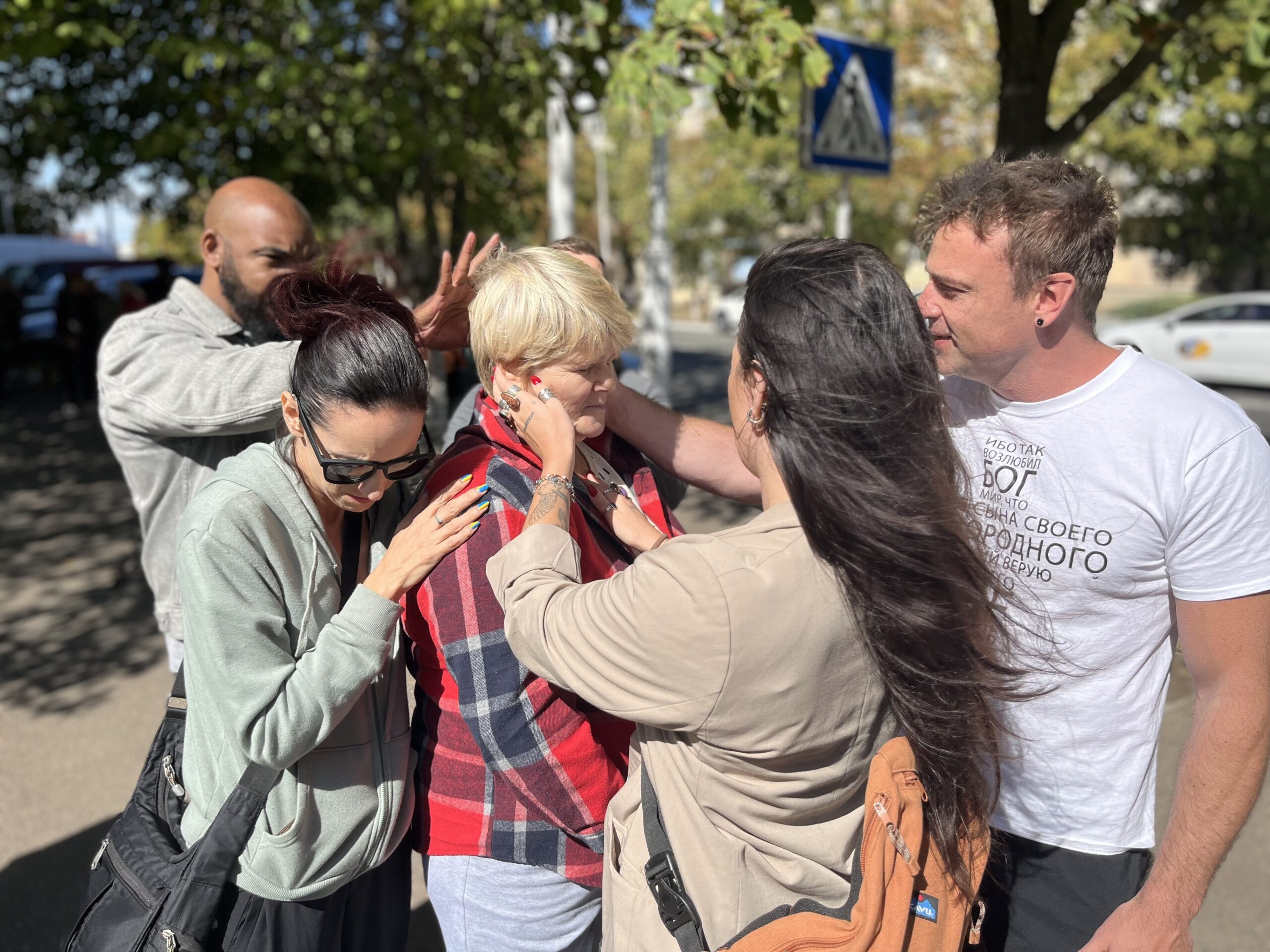
Most weekdays our team would join a local church in Izmael on their weekly soup-rounds with refugees. Each weekday the local church we partnered with would visit a location with a large (7 gallons or larger) pot of soup. They would go to the same park each Monday, a particular shopping mall square on Tuesdays, etc. Our team would help them dish out the soup, share a short message (under 5 minutes) about Jesus and His love and good plans for them, serve soup, and while everyone was eating, we would go around with our translators and pray for people. Sometimes they needed physical healing, and almost everyone needed Heaven’s touch in their emotions.
As you can imagine, with a war going on in the country, with daily drone strikes somewhere in the nation (and oftentimes somewhere in their state), and with family members and friends having been conscripted for the war, many were grieving and lived in a lot of fear. And yet Jesus showed up time and time again with His healing touch. Sorrow would turn to joy, pain and debility into relief and ability, and more. One day we might pray for someone with a cane and Jesus would heal them on the spot—and a few days later when we saw them next, they were still not using a cane. One woman who was deaf began to start hearing. She could only hear vague sound, but it was more than nothing—and we would continue to pray for her hearing each time we saw her for Jesus to complete the job. Quite regularly people would have pain leave their bodies instantly, regain range of motion in their joints, and while not everything got healed instantly, I don’t think anyone we prayed for left without some kind of change when Heaven touched their bodies.
As I mentioned above, Jesus didn’t just come to fix physical problems, but to heal those whose hearts are hurting and broken. And there were many in Ukraine needing His love to heal their hearts. Whether grieving widows, parents in fear for their adult sons at war, or whatever other situation, Jesus touched hearts as well. Sometimes we would just hug someone while they cried, but even then, they would feel loved and know they weren’t alone. And as we prayed for people, it was common to see tears turn into smiles of joy. The Bible tells us that the peace of God bypasses our conscious understanding and goes straight to the depths of our soul (Philippians 4:7), and that in God’s presence there is joy. As we prayed for these beloved ones, the Holy Spirit would come and release His presence, bringing peace and joy with Him and filling everyone who needed it.
One day we drove from Izmael to Odessa (about a 3-hour drive) early in the morning and spent the day there. A few of the team were able to join a military chaplain who was filled with the joy of the Lord and pray for soldiers in the hospital, and each of the men they prayed for received a touch from heaven. One man who had an amputated limb that was in constant pain didn’t believe that anything was going to happen when they prayed—and as they told us the story, he was quite shocked when the pain instantly left at the name of Jesus. That evening we held a healing meeting in a local church and the team called out many words of knowledge and God healed many. At first the people there were unsure of what we were doing (even after we explained it) because they had never experienced the gifts of the Spirit or the power of God like we were demonstrating. But the more we called out different injuries God wanted to heal and the more people got healed, the more people began raising their hands when their problems were called out and were open to receiving prayer. One healing in particular that stood out to me came when we called out “blindness”. Multiple men and women who wore very thick glasses raised their hands, and while I don’t remember what happened to everyone, I remember one elderly gentleman who no longer needed his glasses because his vision had been restored!
These kinds of healings were a daily thing for our team, and I am thankful for that. If I reflect a bit on what we experienced in Ukraine, however, I think it is important to recognize that Jesus is the same in the United States as He is in every other nation. The truth is that if we were in the USA and ministering to people one could easily see similar results. What really is at play is that when we step out in faith to release the Kingdom, God backs us. And if He will back us in Ukraine, as He has done in India, Guatemala, Peru, Thailand, and in other nations that Overseas Missions has visited, He will do the same here as well. Often I think we hear these stories of what God does “overseas” and categorize it as a “missions thing”. I enjoy going on mission trips and seeing God touch people with His power and love all around the world, but it can be easy to forget to apply that same miracle-working power to those around us when we are no longer “on a mission”. In reality, the “as you go” commission wasn’t just about intentional mission trips, it was about “as you go” to the grocery store, to the post office, and everywhere else we go in daily life. If anything, these trips are an opportunity to love the poor and the broken, but also to get equipped to release the Kingdom everywhere we go!
If these stories are inspiring and encouraging to you and you want to find out about future trips, I encourage you to head over to the Overseas Missions website and keep an eye out for future trips. Currently OM tends to run trips 3-4 times a year, and it is a great opportunity to challenge yourself, grow your faith, and see God move in healing and miracles. And if you don’t feel led to go on a trip but want to help sponsor someone else to go or support the missions work of Overseas Missions, you can contact them to see how you can sow into the ministry as well.[/et_pb_text][/et_pb_column][/et_pb_row][/et_pb_section]
A Prophetic Warning at the Moldovan Border – Ukraine 2025
[et_pb_section admin_label=”section”]
[et_pb_row admin_label=”row”]
[et_pb_column type=”4_4″][et_pb_text admin_label=”Text”]
Some of you have been following my journey on social media over the past few months as I raised funds for a mission trip with Overseas Missions to minister in Ukraine this past September. Our initial plan was to help train a local church in how to operate in spiritual gifts, to visit and minister to refugees, and whatever other doors Holy Spirit opened up to us. Our actual trip differed some from the original plan, as it always does, but I believe we accomplished much that God wanted us to and that we deposited things in that nation that will bear lasting fruit. However, to begin doing any of that, we first had to actually get to Ukraine. Because of the Russia-Ukraine war, no one can fly directly into the country, so our team had to meet up in Bucharest, Romania, rent two vans, and drive there. So, we loaded up the vans, as one of the two drivers I accidentally forgot a team member at the hotel (it was only for a few minutes and I never made it out of the parking lot so it’s not as bad as it could have been), we loaded up the vans with all of the team members, and set out for Ukraine.
The drive through Romania was 3-4 hours long, and we were heading to a ferry that would take us across the Danube River and to the Ukranian border. I forget the reason, but at one point Tyler, the leader and other driver, had me re-route our directions to avoid the ferry. We had gotten split up, which didn’t really matter because we were going to the same place anyway, and in the end his van ended up at the ferry anyway. My van, however, did not. Not knowing they ended up on a different route at that point, I followed wherever the GPS took me, which landed me at the border of Romania and Moldova. For a brief geography lesson, Moldova is completely surrounded by Romania on the west and south and by Ukraine on the north, east, and south. Going through Moldova is one method of going to Ukraine. Except we were going to Izmail, a city south of Moldova that is reachable by crossing into Ukraine directly. None of which I knew at the time. All I knew is that I was at the border of the wrong nation, and where I had stopped, it was too late to turn around. Oops.
I forget if I called Tyler or if we messaged because I can’t find the message thread, but when he found out our van was at the border of Moldova his advice was basically “stay safe.” Because what I didn’t know at the time was that in the weeks leading up to the trip, God had given a dream to a friend who wasn’t able to join us. In that dream, God expressly instructed us to avoid the Moldovan border. And because our initial route avoided Moldova entirely (in keeping with the divine instructions) and I had re-mapped a new route, Tyler forgot about it . . . right until I told him that we were at their border. So now I’m not only at a border of a nation I didn’t intend to be at, but I discover after the fact that God had given us explicit instructions not to go that way. Double oops.
Now, this may sound like a horrible turn of events, but I actually found it pretty funny at the time, and I still do. It is just so incredibly human of us to have God give us knowledge and instruction that surpasses human wisdom and yet for us to just bumble along and mess it all up anyway. And because God is good and He loves us, He makes a way for us anyway. So in spite of finding out that I had bungled things up quite nicely, I wasn’t worried. In fact, right when I pulled up to the Moldovan border, God gave me a prophetic word in the form of the license plate in front of me to tell me what His plan was. I forget the whole plate, and the letters didn’t matter, but the plate had exactly three numbers, and they were 333. Usually when I see three 3’s it is in reference to Jeremiah 33:3 which says, “Call to me and I will answer you and tell you great and unsearchable things you do not know.” In other words, even though I didn’t know the details of the situation up-front, God was reassuring me that He was going to tell me whatever I needed to know with wisdom that surpassed my existing knowledge. And with that, I proceeded to drive forward into the border crossing.
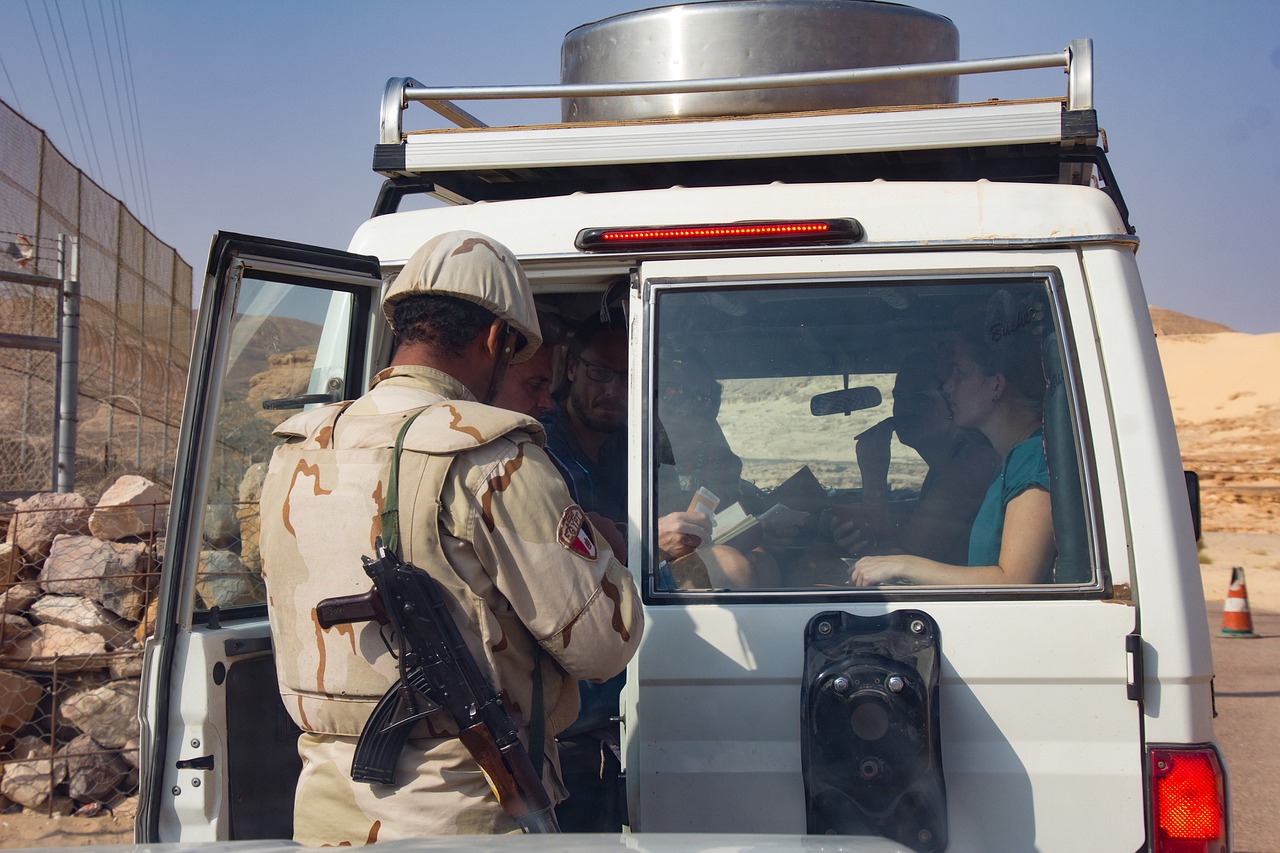
Other than passports, one of the first things the border crossing guard asked me for was an International Drivers License (IDL)—which I did not have. And had I been paying better attention the language of the Holy Spirit leading up to the trip I would have had one because my mom had actually mentioned it to me days before we left the USA. But Tyler had done a bunch of research online and the general consensus was that no one ever asked for one, so he didn’t bother mentioning it or suggesting I get one. Which again was funny because it was one of the first things they asked for at the border crossing I wasn’t supposed to be at.
Once the man found out that neither I nor anyone else in the van had one, he became rather agitated. He kept saying things like “we are going to have to find you another driver.” At which point in time I made the comment “If we don’t have the right license, I can simply turn around and not enter your nation, and that will solve that problem.” Realistically, I could just backtrack, take the ferry the other van was going to use, and skip Moldova. He didn’t like that answer because he replied, “Then you would still be driving in Romania without one.” I didn’t understand why he said that at first, but the second time we replayed a similar conversation I realized what was going on. European border crossings are a bit different than North American ones. In North America the nation you are leaving generally doesn’t care that you are leaving. The only nation who cares is the one you are attempting to enter. This is not how Europe works, or at least the part of Europe we were in. I wasn’t talking to a Moldovan. I was talking to a Romanian border guard, who was getting more upset every time I suggested we turn around and keep driving through Romania without an IDL. Oops again.
He ended up leaving us and checking on some cars behind us, at which point he instructed the driver of one of those cars to come up to our van and show me his IDL paperwork, which that man kindly did, and briefly explained a little to me about international driving laws and agreements between the US and other nations in that regard. Shortly thereafter this Romanian border guard returned to the van, made some comment to me about me being in the military, that I had better have the correct paperwork on my return trip, then let us pass through. Now we were heading to the Moldovan part of the border crossing to actually enter Moldova. (I later discovered that the IDL is a powerful tool of bureaucracy that has exactly zero value for driving ability and it simply mimics a small portion of your license of your existing nation in multiple languages. It can be acquired in under ten minutes online. And as they’re basically just copying your existing license info from your home nation as the template for it, it is pointless. A lot of drama over nothing.)
That segment of the check-through was slightly easier because they didn’t ask me for an IDL, and while they didn’t speaking English, both the Moldovan border guard and I spoke Spanish, so we were able to talk with our mutual second-language to get us through the checkpoint. During that time I also spoke to the man who had come up to the van earlier. His name was John and and as we talked I found out he was in a position of significant responsibility over a US military garrison somewhere in Germany (It took me over a week to realize that a combination of John being present and me having my passport photo be of me in a camouflage shirt must have given that border guard the impression that I was military, because nothing about the passengers or contents of our van screamed “military”). John was visiting Ukraine because his wife is Ukrainian and they had not been back in the country for a while. He also explained that this border crossing was the worst one to use to enter Ukraine and that they always avoid it—but that they had to go this way because this was the only border anywhere close to where they were going that had a veterinarian there. Because they had brought their dog with them on that trip they needed a vet to review their dog’s paperwork to have him be permitted through. And this is where some of that wisdom-beyond-knowledge that God was going to provide us came in. Before we left that checkpoint, John asked me if we had a “vignette”. Having no idea what he was talking about, I said as much. He explained that it was basically a toll or road tax that we were required to pay, and that Moldova would expect us to have it at the next border crossing. Which at that moment, I discovered the next border crossing was only one kilometer away. Yes, we were crossing at the very bottom tip of Moldova and were going to spend a single kilometer of distance in this nation. On the other end of that short road was another Moldovan border crossing and then a Ukrainian one where we would get to do this process all over again. Fortunately, because God placed John in our path, first so the Romanian would believe I was military, and second so we could buy this “vignette” (a 4-euro-equivalent road tax) before arriving at the next border, we were not held up extra at the border as a result.
I stopped at the gas station John recommended, bought the vignette, and then we went to the next border crossing just down the street. Everyone in line was stopped at that one for almost two hours because a group of Orthodox and/or Hasidic Jews who were making some kind of pilgrimage had a bunch of drugs with them and it held up the line, but that gave me more time to talk to John and see if there was anything else we needed to know so we could cross borders without further hassle. There wasn’t. We did not see John or his wife again and made it through the rest of the border crossings without much additional hassle, but his presence at the first border and the insight he gave us into the whole vignette-acquiring process took care of the major issues we were facing at that border crossing, and eventually we were driving into Ukraine and heading to the Green Hall Hotel in Izmail where we stayed for the following week.
There are multiple potential takeaways from this story, such as “heed prophetic warnings,” but the one that stuck with me was to simply trust God to make a way when we need a path opened before us. He told me up-front with the license plate message that He was going to tell me things I didn’t know, so I didn’t really see a reason to get into fear over the border crossing. Was I at perfect peace the entire time? No. But was I amused and generally enjoying the adventure? Yes. Even while we were in the middle of it all, I recognized those were the kind of events that make for a good story and a great memory. I decided to have fun with it all and just see what unfolded before us. And as I did so, God came through with everything He said He was going to provide for us.
[/et_pb_text][/et_pb_column]
[/et_pb_row]
[/et_pb_section]

Should We Resurrect Animals?
I was recently having a discussion with someone about raising the dead, and the conversation turned to whether we should raise animals from the dead or not. He posited that the resurrections we see in the Bible are all of humans being raised from the dead, and so in order to keep with Divine Order we would need to stick within that boundary. Furthermore, since we have been given animals to eat for food (Genesis 9:3), God has expressly permitted us to kill and eat them which means they shouldn’t be raised from the dead. If one person has either of these thoughts then likely many more do, so I want to share with you what I replied with to explain that yes, we should indeed resurrect animals and how we can know that is God’s will for us.
We first have to remember that what we see modeled in most of the Bible isn’t actually God’s end-goal for creation. This means that while yes, Jesus only is recorded as having raised people from the dead and all 12 resurrection accounts in scripture are of humans, that isn’t meant to be a limitation. So what is the end-goal of all of this, and how is what the Bible shows us not a limitation placed upon us? First, God’s plan for us never changed from the beginning, which was for mankind to fix all of creation. This means that creation as we observe it throughout the Bible is not in its ideal state. And this is extremely important to keep in mind as we identify what God’s standards for things are, because His standards don’t always match with what we can currently observe in the world around us. Think about it. We’ve only ever seen creation subjected to frustration and decay. We have never seen creation in its natural state, a state we normally term as “transfigured”. Yes, like Jesus on the Mount of Transfiguration, that is the end-goal for all of creation, and Romans 8 tells us that having our bodies transfigured is the firstfruits of that. Which means our transfiguration is the beginning of all creation experiencing the same thing! Second, in light of that end-goal, we need to adjust our expectations and remove the lid of limitations we tend to place upon ourselves and how we read the Bible. With those two things firmly in mind, I’ll address the two initial items—whether we should resurrect anything non-human, and whether animals are meant for us to kill for food.
1. Resurrecting anything non-human
It doesn’t really matter whether we are talking about animals, plants, or anything else—all creation is in bondage to decay per Romans 8, and it is our job to liberate it. As I mentioned above, this means that nothing in creation should be subject to death or decay, and to the extent that they are, it is our job to fix it. Romans 8 does tell us the pattern, which is that the transfiguration of creation begins with us, but it does not at any point limit it to us. In fact, if it were to limit it to us, then all creation that isn’t a human would still remain in bondage and we wouldn’t be liberating anything besides other humans. But that isn’t what the Bible teaches.
Yes, we only see Jesus and others raising humans from the dead, but it clearly states that not everything Jesus did was recorded and it states that we would do greater because Jesus was going to the Father. He also said in John 16:12 (my paraphrase) “I have more to tell you than you can handle right now, but the Holy Spirit will reveal it all to you later.” This means that Jesus would not have used the Bible as a limiting standard to tell us to only do what is explicitly written about in the Bible because He was expecting the Holy Spirit to tell us more later on. And what about all of the things Jesus did that weren’t written about in the Bible? The argument that we should or should not do something because it is not mentioned in the Bible is a weak argument at best. Electronics aren’t written about in the Bible and yet you are reading this using an electronic device right now. Quite often, especially when we come across things not explicitly written about in Scripture, using the Bible to identify underlying principles is far more useful than identifying specific actions or tasks which are knowably incomplete for the reasons mentioned above.
So how do we see principles in the Bible matching with raising animals? First, ALL death is an enemy of God. If we see death, we have authority to reverse it—not just death if it occurs in a human body. Second, Jesus commanded the disciples to raise the dead—He did not specify “dead humans”. Third, what is the end-point we see in Revelation 21? This gives us a glimpse of what it should look like—when the old order has passed away (it already did and was completed in 70 AD), there should be no more death (Rev 21:4). No more death isn’t “no more death for humans” but no more death at all anywhere for anyone or anything in all creation.
In the conversation he also mentioned that by paying attention to things like resurrecting animals that it could shift our focus away from our actual mission, which is bringing eternal life to people. The idea is well-meaning, but the problem is that the idea is incomplete. While it is true that part of our mission is to release life and immortality to other people, that isn’t the whole mission, and limiting our job to bringing eternal life to people is not the whole story. Our mission on earth from Heaven is probably better understood as “ending the reign of death in all creation and extending the reign of life in Christ Jesus to all of it.” We see this articulated in Romans 5, dealing with the end of one governmental system (death) and the establishment of a better governmental system (Life in Christ Jesus), but this isn’t just about humans. It begins with humans, but doesn’t end there.
2. Killing animals for food
This is a subject that is related to something I discuss in-depth in my book “The Gospel of Life and Immortality”. Chapter 11 talks about living from Heaven’s supply and not requiring food as an energy source, and it is probably one of my favorite chapters in that book. I don’t think I specifically address killing animals, but the concepts I explain in that chapter have obvious applications to this subject. Killing animals for food was basically a concession God made for humans, but it is not the end-point. We will eventually cease killing animals for food entirely because all death will be done away with. It is permitted, but even Paul said that not everything that is permitted is beneficial. It is a for-now thing, not a forever thing. This goes back to what I mentioned initially about needing to look at things from a perspective of the end-goal and God’s standards. When death and decay no longer manifest in any form in all of creation, there is a chance it will even become impossible to kill animals because the state of death simply will not exist any longer. Even if it is still possible to do, there will be zero need or reason to do so, nor will we have any interest in killing them. Killing and eating them in the future only makes sense if we are required to consume animals as a source of food, which we aren’t. And I’m not just limiting that to animals and saying everyone should be vegetarian. We will not require food of any kind, and as such all food will be consumed for enjoyment, not sustenance, and creation will have transfigured in such a manner that it can give up its bounty to us for our enjoyment without it diminishing itself as well. In other words, a tree can give us a fruit and yet simultaneously not lose the fruit even while we are holding and eating it because the power of life makes that possible. We can take a leaf off a tree and yet the tree does not lack its leaf because the power of life makes it so. As Apostle Tommy Miller puts it, the goal of God was for “people that look like Him in a creation that looks like Heaven”. And there is no death or lack or limitation in heaven. As such, any time we look at creation through a lens of limitation or lack then we are putting carnal limits on things that God never intended, and He is calling us higher in our perspectives.
The bottom line is that we will get the opportunity to partner with God to reverse all decay in the animal kingdom because we will be reversing it in the entirety of creation. This naturally includes animals, but extends vastly beyond just animals. Our job as stewards over creation is, in part, to fix everything that is broken, which means all death and decay must (and will) go. Raising dead animals is one tiny example of that. So if anyone has ever wondered if we can or have permission to raise animals from the dead, if it is part of what salvation and the gospel covers, or even if we should be eating animals for food, just know that we have been given a mission from God along with the power and authority to carry it out, to put all death under His feet and to bring restoration and life to all creation through enforcing and extending what Jesus did on the cross to all creation!

My Divine Appointment with Ann
Every night at the hospital is different. Some are busy with good old-fashioned hard work. Some nights are extremely peaceful, everyone seems to be sleeping well, and are generally doing okay. Occasionally I will have a night where it is evident that God is doing something more overt than usual. Now, to be fair, God is always doing things in our lives, but it is usually when we don’t expect it that memorable things occur. I remember years ago hearing prophet Larry Randolph say something that has always stuck with me, “In the midst of the mundane, the supernatural happens.” Often it is in the middle of the most mundane and unextraordinary things that we see God do the spectacular, the fascinating, and the life-giving. My friend Diane calls these encounters “divine appointments”. My night with a patient named Ann (not her actual name) was one such memorable time, and I want to share the story of that night and the various things God did during my Divine Appointment with Ann.
I was working in the float pool at the time, which is a lot like being a substitute nurse for whatever floor has a nurse call in sick, etc., and was assigned to a PCU/Telemetry floor that particular night (a lot of heart-related health problems and people not well enough to be on a normal floor but not sick enough for the ICU). Ann was one of my patients that night. She was in her 70’s, if I remember correctly, and she just had this really enjoyable atmosphere or aura about her. I forget how it started, but we ended up talking a bit about our lives, which then caused us to delve into a conversation about spirituality. She grew up in the Episcopal Church like I did, but somewhere along the line she moved into shamanism. I am not entirely sure why she asked me, but she asked me how to overcome fear and we began to talk about God’s love. She shared with me some different spiritual encounters she had over the years (which I always love hearing about). We even had a moment where we just stared at each other silently. And while that normally would be really strange to do, we both just felt this unconditional love for one another and without discussing it, we both fell silent to just be in the moment with the other. The silence in sharing of love must have lasted for at least a minute, and may even have been longer, but it was profound. I’m not actually sure if I have had an encounter like that before, and I know I have not since. We didn’t need to explain it to the other and we didn’t need to even discuss what had happened because in that moment of connection and love we just knew what it was and knew the other was encountering the same thing. It was an expression of Divine Love being shared between us on a deep level.
At one point I was going to get her some pain medication for a headache she had, and given that we were already discussing things spiritual, I offered to pray for her. You might think I pray for all of my patients, and it might surprise you to hear that I don’t. There are times that I pray for them or over them without their awareness, releasing healing and life to them, but it is actually fairly rare that I directly offer to a patient to pray for them. It isn’t because I’m ashamed of my faith or because I don’t think God can help them, but in current USA work culture you have to be wise about when you put those sorts of offers out there for people, and also I am often just focused on the more physical nature of my job, so it doesn’t always come up. I commanded her headache to leave and it did, so she didn’t need the pain medication any longer—which she was happy with because she, like I, don’t prefer to use pharmaceuticals if we don’t need to.
During one of our conversations that night, I was looking in the spirit and saw a black object sticking out of her right shoulder. When I told her about what I saw, she told me she had actually seen it on her pillow earlier that night, but in the mental space she was in it hadn’t occurred to her to “vanquish it” (her term) like she normally would. I removed the black object in the spirit, and as I did this I saw God clothe her with a rainbow cloak. I didn’t honestly know what it meant, so I just shared the vision with her. Interestingly, she then told me that every morning during her morning meditations, she would pray and release life upon our government, her family, and so on, and that each morning while she would do this, she would put on what she referred to as her “spiritual raiment”. What I loved about that is that in many ways it sounds similar to what I would call putting on the “Armor of God” that is referenced in Ephesians 6:10-18. And even though she didn’t follow the Episcopal church’s version of faith at that point, she was still doing something that fairly matched it anyway.
I don’t have any profound message to share about this particular encounter or a special set of takeaways, except maybe that we need to remember to enjoy the moments in life even when they feel mundane. Because it is in the middle of those mundane moments, those times of boredom or monotony, and often when we feel the least spiritual because we aren’t praying or doing anything overtly “Godly” that He reaches into our day and causes us to encounter Him, to have moments to share His love and goodness with others, and more. And like God did with Ann and I, maybe we’ll even just share a moment of experiencing deep and wordless love for one another and Him. After all, like prophet Larry Randolph said, “In the midst of the mundane, the supernatural happens.”

Practical Thoughts on Raising the Dead
Charlie Kirk’s execution/assassination yesterday has many people unsettled for a range of reasons, but I don’t plan to go into any of that. What the situation has done in one of my specific areas of focus is something that consistently happens almost any time some major news event that deals with death and dying occurs. And that is a focus on what I refer to as “Celebrity resurrection.” I define “Celebrity resurrection” as a focus on attempting to raise the dead specifically in the case of a high profile individual, regardless of whether that person is high-profile due to their profession, news coverage of an event, or any other cause that makes it become high-profile. What tends to happen any time a high-profile individual passes away is that for some believers it reminds them that through Christ Jesus we can raise the dead, and they have a desire to extend that offer of life to that individual. I both love that and am frustrated by that simultaneously. This is a difficult subject to navigate well because there are multiple factors in play that all stand in tension with another, and all of them have their own measure of validity. So in light of yesterday’s atrocity, keeping in mind that we, the Body of Christ, are meant to provide solutions to every problem, I want to discuss some practical thoughts on raising the dead and specifically look at the barriers that one will deal with when it comes to celebrity resurrection.
Any time we are raising the dead we will ideally look to get access to their body. Is it possible to raise someone from the dead without that? Yes. Can God re-create a body from ashes such as in cremation or a house fire? Yes. Can He teleport someone’s body that is washed away in a flood back to you so you can raise them? Yes, He both can and has done so. But that doesn’t change the fact that the predominant means of raising the dead is quite simply to command life over someone’s body. I don’t say this to create some sort of mental or theological limitation, but to recognize that the vast majority of the time that is how it will occur, and as such, gaining access to the body to pray should be a goal of ours.
In most first-world countries, we like to hide our dead. There are legitimate sanitary and legal reasons for some of this, but it does create barriers and restrictions to gaining access to a body for resurrection prayer. I had someone ask me yesterday if traveling in the spirit to pray over someone’s body is an option. Yes, that is always an option. And for those who want to understand more about what that means or what that is, I teach on the subject at length in my book The Beginners Guide to Traveling in the Spirit, so I’m not going to cover that further here. But while it is an option, as I said above, it’s not the primary option and gaining access to the body should still be a main goal/method that we use.
Where the issues of body-access comes into conflict with raising the dead as a whole, and especially with celebrity resurrection, is that we generally need family permission to gain access to the body. Obtaining family permission can be difficult all on its own without even considering someone’s potential high profile status. Most people, and even most Christians, still consider the concept of raising the dead to be extremely fringe even though it is a pivotal aspect of the Christian faith—to the point that if raising the dead doesn’t happen, Christianity has zero value as a belief system because if the dead are not raised then it would be a lie. Fortunately, God does raise the dead, Christianity is not a lie, and raising the dead is gradually becoming more mainstream as people get a greater revelation of God’s desire for abundant life for us.
Obtaining family permission is generally as straightforward as asking the family for permission. But straightforward does not mean easy. I don’t know that there is almost ever a time when asking someone for permission to pray over their deceased loved one is not daunting. Our own fears and doubts start to rear their heads and we have to militantly govern over our thoughts in those moments. Broaching this subject with someone has very real risks from being the target of ridicule and anger up to and including a complete loss of relationship with both the person we ask and others around them. Nevertheless, if we want to obtain access to someone’s body, we have to have that uncomfortable and risky conversation. And we have to have it with the right people.
Outside of situations where someone dies right in front of us, we first have to have access to the family. Then we have to have a favor with the family in order for them to say yes. Even once they say yes, there has to be follow-through on their part to actually give us the access that they told us we may have. The logistics of that follow-through may have a number of hoops to jump through as well as potential monetary costs associated with it. For example, a funeral home may charge the family each time we want access to the body to have time to pray over it, and they may have limitations on certain hours when we are permitted to do that. And at least in the United States, there is nothing illegal about the funeral home doing that. All of that can create more barriers to the resurrection effort, and at any step of this process we can lose the person’s interest or buy-in for any reason
Where this gets more tricky with celebrity resurrection is that due to the high profile nature of the circumstances, family is usually being bombarded by people. Whether it is a famous actor or singer who has potentially hundreds of thousands if not millions of fans, or something that is big in the local news and it’s getting a lot of local attention, the family is dealing both with the death of their loved one, as well as having to handle media and social media pressure and attention. Without immense favor from God in these circumstances or a pre-existing relationship, it is usually very difficult for someone to get access to the family to even bring up the request.
So does that mean that because it’s hard that we simply abandoned the attempt in those situations and only try for ones that feel less-difficult? Not necessarily. However, the guidance I would give on the subject is that we need to be conscious about staying within what the Bible calls our metron, also known as our “area of influence.” I firmly believe the Body of Christ has this solution available to offer Charlie Kirk’s family on his behalf. However, on a personal level, I do not know anyone in that family and I don’t think I know anyone with even two degrees of separation to that family. So while the will of God is for him and every other person on the planet to be raised from the dead, unless something happens and God opens that door for me (which I am very open to), I will not be making personal attempts at that in this specific circumstance. And again, this is where it’s a sensitive subject with nuance. Because neither the will of God or the situation have changed. His desire is for life. But there is a very real matter of divine order in how God chooses to do things in most circumstances, and unless/until God opens things up to bring that into my personal Metron, it simply isn’t, and is therefore someone else’s job. Again, that doesn’t mean that someone shouldn’t attempt to raise him from the dead. It just means that unless things change, that person isn’t me and likely it isn’t anyone I know either. Which means if you’re reading this, unless you have either a specific leading from the Holy Spirit, a relationship with the family or the ability to get it, and divine favor for access, then it isn’t you either. And in a situation that is as tragic and evil as this one is, that’s not nice news to hear, which is part of what makes this a sensitive issue, but that’s not all.
There is a separate matter of motives and motivation. I think this is never a bad question to ask, but I think it is all the more appropriate in the case of celebrity resurrections. We each have to ask this question in our own hearts, which is “of all of the people who have died in the last week or month, why am I focusing on this one?” There are a range of potential answers, and most of them aren’t necessarily bad answers. For me, in some situations, I have directly and personally known the deceased. At times, it has been a friend of a friend or a friend’s family member. In other circumstances people have reached out to me because they have read one of my books or articles on the subject, heard me talk on a podcast, or been informed about me some other way. On occasion I will get a request from another minister who knows that I believe in raising the dead because I live comparatively local to the person who reached out to them for help. It varies from circumstance to circumstance. For me, the motivation is always that death is an enemy, grief and pain and death are evil, and God desires that person and their family to experience life. What is generally never a motivating factor for me is the level of famousness of the person involved. But that is often a primary motivator for many people who want a celebrity resurrection. And it is another part of what makes this a sensitive subject to discuss.
I don’t want to discourage people from praying to raise the dead because I firmly believe it is always God’s will to resurrect them, every single time. And yet there is also this issue of operating in our God-assigned sphere of influence, and those two can at times be in conflict with one another. How I resolve what can sound cognitively dissonant in my own mind is to recognize that while God may want someone to do that thing, God isn’t always assigning that thing to me. Nor should I necessarily assign it to myself.
I have had plenty of times in my life where I have prayed to God and asked Him to do something in a situation and His reply has been “you do something”. That might sound like a strange response to hear from God until we understand that we are collectively assigned as His change-agents in the earth. In other words, long ago, God delegated everything in the earth to us to fix, and he has never undelegated that to us. Which means it’s still our job, not His. Whether it comes to raising Charlie Kirk from the dead or anyone else, that is our job as followers of Jesus Christ. The individual details of which person does which things are largely at the direction of the Holy Spirit, but it is conclusively our collective job to do the things that remove death and decay from the cosmos and fix all creation to make it become on earth the same way it already is in heaven.
So while God has assigned dead-raising to us, God has not assigned every single one of those to me personally. This means that in every situation, whether it is raising the dead, healing the sick, speaking a word of encouragement to a neighbor, or anything else, we have to be aware of those things that are within our sphere of influence and therefore are our God-ordained responsibility, and those things that are outside our metron making them someone else’s. I believe looking at heart motivation is important in this type of situation because if we don’t look at it, we can assign things to ourselves that are outside of our metron, which is unwise at best and is otherwise fairly nonfunctional.
Why do I care more about raising someone from the dead who is on the news than I do the grandmother down the street? When the news and social media give something significant public attention, it signals to our subconscious minds that this thing is more important than all of the things that are not receiving that same public attention. And that is where the trap is. Increased public attention has nothing to do with whether something is in or outside of my metron. The two are unrelated, which is why I ask the question I did before about internal motivation. Am I motivated to do this because my subconscious has been signaled by a bunch of outside influences? Or is this because this is what God is actually saying and doing right now with me personally? I challenge myself with these kinds of questions, and suggest that anyone reading this do the same. We must be people to discern what God is saying and doing with us on an ongoing basis.
So again, any time the matter of celebrity resurrection comes up, I encourage us to look at our heart motivation and identify whether this is in or outside of our personal metron. If it is within our metron then we need to take practical steps to walk that out, which usually is going to look like contacting the family, receiving access to the body, and commanding life. If you are not sure how to go about doing any of that, or want to up-level your beliefs on the subject, I encourage you to pick up a copy of my book Faith to Raise the Dead. If you are currently in the middle of a resurrection attempt and don’t have time to read a longer book on the subject, pick up a copy of my book Practical Keys to Raise the Dead, which is short excerpts from the other book and is designed to cover just the immediate practical things you need to know in the moment. For additional resources, I recommend the books How to Raise the Dead and The Dead are Raised by Tyler Johnson, and the book Saints Who Raised the Dead by Father Albert J Hebert, a Catholic priest who chronicles over 400 resurrection stories throughout church history.

None Of This Is Life Or Death
Do you ever have those moments where you say something and when you hear it come out of your mouth you realize it carries a lot more wisdom than you intended? I was in line at the grocery store the other day. The cashier was getting extremely flustered because she had messed something up on the register and the line was backing up. And backing up some more. And backing up some more. And she was visibly stressed out by it all. Eventually, it was my turn to check out, and without me saying anything she apologized for everything taking so long. I replied, wanting to be encouraging and not meaning to be dismissive, by saying “Yeah, I wouldn’t worry about it too much. None of this is life or death.”
And right when I said that, it really hit me. I think sometimes because of my job as a nurse I forget that most other people’s jobs really aren’t life or death issues. I think there are very few professions in the world where you can be driving home after work and truly wondering if you might’ve accidentally killed someone today. And I am fairly certain that every nurse, doctor, paramedic, EMT, and others in the medical field know exactly what I’m talking about. But most jobs aren’t like that. In reality, most things in life as a whole aren’t like that.
And that’s not to say that other large life decisions don’t matter, because they do. But if I look at the number of times I get stressed by something in a day, it can be easy to lose sight of the fact that in the grand scheme of things it’s really just not a big deal. Has traffic backed up and it’s taking longer than I thought to get somewhere so I will be late? Possibly. But is it life altering? Generally not. We all have stressors in life. And some of them are bigger than others. Having bigger stressors doesn’t automatically make the smaller ones disappear, but I think sometimes a shift in perspective can help, and in some cases help a lot. As that saying not-always-accurately goes, “Don’t sweat the small stuff. And it’s all small stuff.” I don’t think it is all small stuff, but knowing when to not sweat the small stuff can be a valuable skill to develop.
But the more I thought I about this idea, I then thought about how sometimes things we don’t think about much actually can have far more significance than we realize. How many times do we make a light of something when in reality it is participating long-term to producing life or death for us? If I am stressing over something insignificant, is that now producing death in my body when otherwise it never needed to? What about complaining about unimportant or minimally frustrating things? Or even just complaining as a whole? I won’t pretend that I have mastered that one by any stretch of the imagination, but are there areas in life where we consistently align ourselves with death without realizing it because we have become so accustomed to doing it?
The Bible tells us quite plainly in Proverbs 18:21 that, “the power of life and death are in the tongue, and those who love it will eat its fruit.” It mentions in Matthew 12:36 that we will be judged for every idle, careless, or useless word we have spoken. Now I’m not saying we need to be hyper legalistic or critical of every word that we or others say, as that is just creating its own special path toward religion and bondage. But I do think it becomes an opportunity to encourage us to check back in with the words that we say and the ideas that we communicate on a regular basis.
There is a rather obscure verse in the Old Testament, Isaiah 28:15, that talks about how the Israelites made agreements with death and covenants with the realm of the dead, and it really begs the question, how often do we through our word choices make agreements with death as well? I lay this concept out in significantly more depth in my book The Gospel of Life and Immortality. In that book I also go over some very common everyday examples of where we use our words to produce death. But I think this can actually be a very important subject for us to understand better. Often we produce death in our lives without even realizing it, and it is largely because we have gotten so used to it as a culture that few of us even think about the long-term effects of some of the simple statements and beliefs we hold. If this subject speaks to your heart at all, I highly encourage you to get a copy of that book. It is available in print, Kindle, and recently just became available on audiobook. Because so often the things that we think, say, and do in life really aren’t life or death issues. . . Until we look a little deeper and realize that maybe in fact they are.

Appropriation versus Enforcement of Dominion
There is a disconnect or divide among some groups of believers when it comes to walking in the fullness of all that Christ accomplished for us on the cross. There are those who fall more into a “finished works” mindset, who believe that Jesus accomplished everything on the cross and we just have to believe it to receive it. This group tend to take exception to the other group, who usually say things like “Jesus did it all on the cross but now it is our job to appropriate what he did.” I understand why the divide exists because they are both partially correct so I want to offer a third option that I think more fully pulls together the various accurate ideas of each camp under one conceptual head.
The first group rightly believes that when we understand and believe the truth that it brings us into freedom, and it facilitates us operating in the fullness of everything Jesus accomplished. On the other hand, the second group has understood something vital that also needs to be recognized and addressed. The second group realizes that while what Jesus did legally on the cross was complete, the world does not yet fully look like everything He accomplished on the cross. And this is where the idea of appropriation as a Christian term comes from— the notion that to the extent that things are not already on earth as they are in heaven, that it is the job of the believer to make it that way.
I think that these two groups are actually in greater agreement than they think, but both operate in certain areas of error and both are focused on different aspects of the situation. As such, I don’t think that we will make much headway moving forward in unity on this matter without a change in terminology. I propose we move from speaking of Appropriation to talking about Enforcement of Dominion.
Before going further, we need to understand some of the basic errors of each of the two groups, and then define some terminology. What I refer to as “Finished Works” theology and the resulting camp of followers essentially believe that because Jesus accomplished everything on the cross there is now no longer anything else for us to do and we just sit back and believe God and then watch Him do the rest. And when people struggle to live in fullness, the common rationale is that they need to “believe more/harder in the Finished work of the cross” and that will solve everything. Ultimately the finished work group has turned belief into a form of work. Now they don’t phrase it that way, but at the end of the day, that’s the underlying message, and belief/faith just becomes the new form of works.
The appropriation group tends to not focus enough on changing our beliefs and letting our heavenly identity guide what we believe and how we live. That group tends to be more effort-focused in a different way. This group tends toward encouraging spiritual warfare and intercession to tear down strongholds and principalities, prayer walking one’s neighborhood or town, breaking curses, and doing inner healing and deliverance ministry. And while each of those activities can be effective tools to release the Kingdom on earth, they actually work best when they are combined with something closer to a Finished Works mindset. And I say “closer to” because it only works better if they don’t trade out the flaws of the Appropriation mindset for the flaws of the Finished Works mindset.
Before going further, we also need to firmly keep in mind that while ministry is not something that needs to be done in heaven, it absolutely needs to be done on earth, and will continue to need to be done until we are all walking in fullness. Jesus is the one who appointed apostles, prophets, evangelist, and pastors, and teachers to bring the whole Body into unity and maturity (Ephesians 4) because He recognized a few thousand years ago that we aren’t there yet even now and would need overseers that He has appointed over His Body to help shepherd us on the way. And I say all this because no one in their right mind who has also logically thought through what the scriptures say could arrive at the idea that everything is already the way it needs to be and all we have to do is believe. The Holy Spirit doesn’t even think that.
It is the Holy Spirit who has divinely given us empowerment such as “gifts of healing,” and not because Jesus did something incomplete, because the Holy Spirit only ever works in agreement with Jesus Christ. In fact, without the Holy Spirit, Jesus couldn’t be “Christ” because the word Christ means “the anointed one and his anointing” and it is a direct reference to the work of the Holy Spirit in Jesus’s earthly life. This is important because we must understand there is ministry work to be done. We should not be telling people to stop doing or receiving ministry and just to believe that Jesus did it all because Jesus is the one who set up ministry to begin with. However, we do need to shift some of how we do ministry and the focus or approach we take with it. I think this will make a little more sense once I define a few words.
The word appropriate has two meanings; one means that which is fitting or right, as in one is having appropriate behavior in a situation, while the other has to do with taking something for one’s own use, and the implication is usually that it is done without the owner’s permission. In Christian terms, we use the word appropriate to say that we are taking what Jesus did and we are applying it to our life or the current situation. And while that is accurate to a certain degree, the word itself suggests that we’re doing something without permission, which is untrue. And I think there is a level of mindset that it creates that comes into agreement with this idea that Jesus didn’t accomplish certain things so we have to take it and do the rest of the work. And while some of this is nuance more than anything else, I think we are at a place where that nuance has become important, and it has actually become a barrier to people receiving fullness.
This brings us to the word Enforce, or Enforcement. According to the New Oxford American Dictionary, to enforce something means to compel observance or compliance with a law, rule, or obligation. The word Dominion means sovereignty or control, and is generally used in context of a governing individual or governing body having rulership. We need to understand that while God is sovereign, which means He is the highest authority or highest governing body in the cosmos, not everything goes God’s way. God is sovereign, but He is not in full control of everything. As such, it falls to us, the Body of Christ, to enforce his dominion in the Earth. To the degree that rebellious principalities and powers seek to establish their own dominion, it is our job to enforce the dominion of Jesus Christ in the Earth. To the extent that sickness and disease and decay and death want to continue to reign, it is our job to enforce the dominion of Jesus Christ, who reigns in life. We are not appropriating something as if we are taking something that didn’t belong to us to begin with. We are enforcing that which Jesus already accomplished on the cross. To the degree that someone’s body does not yet fully look like wholeness and life, we enforce His dominion. To the degree that decay still functions in the cosmos, we enforce His dominion. To the extent that fallen principalities and powers seek to enslave, afflict, and torment humanity and creation, we enforce His dominion.
We aren’t working for something that we have to earn. We aren’t battling from an earthly perspective to try to bring something from the heavens down. We sit enthroned at the right hand of the Father with Jesus Christ, having fully established all power and dominion on the cross from a legal standpoint in all of the cosmos in all of time and eternity, and we legislate and enforce that dominion in the Earth.
This means that when we cast out demons (and as believers we do cast out demons), we aren’t asking them to leave. We expel them because we are enforcing the domain of heaven. We aren’t asking sickness to please get fixed, and we definitely aren’t asking God to heal someone when He already told us to go do it. We are enforcing His dominion in the Earth and command it to be so. When a Son or Daughter of the Most High who knows their position and authority shows up, Creation’s only option is to bow its head and obey.
It might sound like nuance to some, but I think it’s vitally important we shift our terminology from Appropriation to Enforcement of Dominion. Appropriation sounds a lot more gentle. It sounds like we are tenderly acquiring something that we think we should have. Enforcement is really what we are doing. There are spiritual offenders out there who have transgressed against the Law of Jesus Christ, the Law of Love, and who have set themselves up against His reign of Life in the earth. The Bible says in Matthew 11:12 that the kingdom of heaven is advancing by force and forceful men lay ahold of it. When death, loss, and destruction show up on our doorstep, we are never to treat it passively or tenderly or gently. Spirits who have corrupted and perverted creation and who have chosen to make mankind enemies don’t get asked to please follow the rules. We don’t suggest that maybe they should do what Jesus said. We enforce his rule in creation.
The Bible says that He has already given us everything pertaining to life and godliness. And that’s where the Finished Works crew gets it right. We aren’t asking Jesus to do something as though He didn’t already do it. But sometimes it’s not just about believing the right thing. It’s about actively taking dominion over rebellious spirits and enforcing what Jesus Christ already did and never taking “no” for an answer.

All Death is an Enemy—Live Accordingly
After moving to a very small town in Ohio earlier this year, the nearest countryside is about a two minute drive away. And that’s not an exaggeration. That should just tell you how small of a town I’m living in. One of the things I see on a near-daily basis as a result, is roadkill. Squirrels, rabbits, raccoons, a lot of deer, and the occasional stray cat or unrecognizable bird. And as often as I can remember to do it, I command life into those bodies each time I pass one. Why? Because all death is an enemy, and we should live accordingly.
I haven’t done it in a good number of years, but from time to time I used to stop, put the roadkill in the bed of my truck, and continue to pray over it for 2 to 3 days. When I was still married, my wife and I had a house rule at the time that three days was the maximum that I would keep them. Not because Jesus was in the tomb for three days or any other pseudo-spiritual reason someone can think up for a three day time limit. No, this was purely practical. After about three days, the level of decay that the body underwent became enough of a problem that we agreed that if it hadn’t risen in three days, I would let it go.
Now, I understand that to most people this seems like extreme behavior. But what if it isn’t? What if we as the Body of Christ have gotten so complacent with death that we stopped giving it the level of attention that we should have been giving it all along? I’m not saying everybody has to go pick up roadkill and pray for it and if they don’t they are somehow neglecting the gospel. That would be a ridiculous assertion to make. What I am saying is that I think we have become so accustomed to death that we generally don’t give roadkill a second thought.
Sure, if we can see that it was somebody’s dog or cat we might say a quick prayer for the family, but what if praying for peace for the family wasn’t the solution that God wanted us to offer? What is God was actually just wanting us to reverse death? It’s not that crazy of a proposition. The Bible tells us in Romans 8:11 that “the same spirit that raised Jesus from the dead quickens and gives life to our mortal bodies.” It is this same Holy Spirit that empowers the gifts of the spirit. The same Holy Spirit, by which we work miracles. By which we prophesy. It is the same Holy Spirit who transfigures our bodies. Why would it be strange that the same Holy Spirit is still in the business of raising the dead?
Now, maybe roadkill is a bit too extreme for some reading this. While I disagree, I can accept that some people feel that praying for animals to be raised from the dead is too much. But how many of those who think roadkill is too extreme have even prayed for a person who died? And how many other limitations are we going to place on when we decide to stand against death? Let me tell you the ones I most commonly see: If somebody is too old, they deserve to die. If we arbitrarily think the person might not want to return to life, we let them stay dead. If we think they have too many injuries or disabilities, we decide it’s OK for them to be dead. I would argue that we are far more comfortable with death than God ever intended. Far more cavalier about it. Far too accepting.
So what am I suggesting the standard should be? It’s actually extremely simple, doesn’t require special memorization, and is really straightforward to apply. The way we can know when we should reverse death is if it is present. It’s that simple. If death is there, we reverse it. Every time. Every situation. It doesn’t matter the age, the physical circumstances, what we think we arbitrarily believe the will of the deceased to be (none of which can be concretely tested by any reasonable prophetic standard and pass). There are no special provisos or side clauses that give us a way out. If death, loss, or destruction is present, it’s the job of a son of the Most High God to fix it.
But Michael, that’s a really high standard.
Yes, it is. What’s your point?
I’m going to let you in on a little secret: I didn’t make that standard up. Jesus did.
If somebody can show me, and I mean truly and unequivocally show and prove to me that there is a circumstance of death, loss or destruction that the shed blood of Jesus on the cross was not meant to solve, that the power of God was never intended to reverse, then I will back down on that standard. But they cannot and it’s impossible to prove that, because Jesus’s standard about life and death and His work on the cross is absolute and doesn’t leave room for compromise.
There is no “yes, but what if. . . “. Our job is to fix it. And yes, that’s going to get inconvenient at times. But that just means we need to get used to being inconvenienced.
As an RN, I currently work in an ICU. I am surrounded by more death now than I have been at any prior time in my nursing career. And I still pray for life in every situation even when it seems hopeless or pointless because Jesus didn’t give us any other standard. Jesus didn’t say “only pray for life if you think it will matter” or “when situations look really hopeless, it’s OK to just give up.” Jesus stood in front of the tomb of his friend who had been dead for multiple days and even then it still wasn’t too late. There is no time, situation, or circumstance in all creation where it is too late for Jesus to do something. That doesn’t mean outcomes always goes the way I want or expect them to that doesn’t mean I always receive the answer I am praying for. My failure to fully steward what Jesus accomplished says nothing about what Jesus accomplished and says a lot about my ability to steward it. But one thing I do know for certain is this: according to Jesus all death is an enemy, and we must live accordingly.
If you want to learn more about how to walk in resurrection power, pick up a copy of my book Faith to Raise the Dead and its sequel The Gospel of Life and Immortality.

The Truth Should Set You Free—But What Do You Do When It Doesn’t?
I was out at coffee with a friend recently and of the range of things we discussed, we spent some time on one in particular that I want to share with you today. We were discussing inner healing, and he mentioned that deliverance ministers are by and large the unhappiest Christians he knows. And to be fair, that’s probably an unfortunately common trend. I think part of this is that those who focus on inner healing and deliverance can risk getting stuck in the weeds of things, so to speak, because they are constantly facing and trying to unravel people’s problems to get them free. I think another part of this is the same as the motivation for many who study psychology—they learn it to figure out what is wrong with them. With this in mind, he asked me why (although he worded it better) I think all of this other “stuff,” dealing with parts and emotional healing and related, is necessary, when in reality it should be as simple as learning the truth and letting it set us free.
To be fair, he is 100% correct. The process of internal freedom and transformation should be as simple as hearing the truth, because when we know the truth, it sets us free. So if it is that simple, then why do we have all of these other methods, and why does it not always seem to actually be that simple? What about all the times we have heard something true and yet it doesn’t bear the fruit it should?
This issue is why I am so big on people understanding mindset transformation, casting out demons, emotional healing, and working with parts. It should be as simple as us learning the truth, changing our beliefs, and becoming free. But what happens when our soul is shattered into pieces and demons afflict and attack each of those broken parts with lies? And what happens when those parts believe the lies? And what happens when the pain they carry constantly preach a lie to them?
What happens is barriers to healing, growth, and freedom. Which is why I teach what some ministers believe is “adding steps” to the gospel, whereas I see it as enforcing the gospel in a person’s life. I fully agree with my friend that it should be as simple as believing the truth, and for some things it is that straightforward. But the more engrained a belief is, the more trauma that is attached to it, and the more pain that it has caused in the individual’s life, the more the lie is reinforced and usually the harder it is to unravel and replace with the truth.
What we began to discuss was something that I think my friend puts quite well—that when walking in fullness doesn’t seem to be working, we can fall back on Biblical principles until the manifestation of the breakthrough comes. It is true that all we need to do is believe the truth and it should set us free, but when that fails to work for a range of reasons, we can use biblical principles of inner healing, casting out demons, breaking curses, and more to exercise dominion in the realm of our soul to see the breakthrough come.
I have explained this concept at length in my book Broken To Whole: Inner Healing For The Fragmented Soul and in other articles (for a good summary, check out How Can I Keep My Freedom After A Deliverance Session. If you want to understand some useful biblical principles for life as a whole, I encourage you to pick up a copy of my book The Power of Impartation. If you want to really dig in I have developed the Diagnostic Prayer Method that will give you the tools to break past the barriers holding you back. To learn more about the Method and the Community that will help you go deeper on your healing journey, head over to the Diagnostic Prayer Method.
For a two message video teaching series on why the soul is so important to the physical body and how to use the Diagnostic Healing Prayer method, check out the following:
The Soul Brings Life To The Body
Flower Essences for Inner Healing:
Freedom Flowers Bouquet Blends

What is Pre-Incarnation and Why Does it Matter?
I was on a Zoom call the other day and we got onto the topic of pre-incarnation— the idea that we existed in the heavens in eternity before our spirits incarnated into our bodies and formed a living soul. What brought it up was somebody mentioning the idea that we choose the type of pain we will experience in our life—and how for some, this can be a difficult concept to reconcile with their belief in God. Because why would God pre-choose suffering for me? That idea doesn’t seem to match with a good and loving Heavenly Father. In this article, I will try to help reconcile some of the perspective about a pre-incarnation existence in heaven and choosing our incarnation, with the fact of God’s nature being good and loving and kind, etc.
As with most things, I think we need to begin by understanding Jesus is our model. When I look at Jesus as our model, I see that Hebrews 12:1 says this of him: “for the joy set before him endured the suffering of the cross. Therefore let us run our race.” It wasn’t that God desired suffering for us so He sent us to incarnate into the earth. Rather, it’s that in order to incarnate into a fallen world that needs restoration, it was a fact that we would experience pain, suffering, and problems. I believe that our Heavenly Father is a good God, and so I believe that He actually gave us a choice with *disclosure* of what we would face. Our Father wasn’t simply condemning us to some sort of painful 3-D reality, bur rather He invited us into a partnership with Him to restore the cosmos. One that He knew would cost us each individually, but ultimately was going to cost us far less than it cost Jesus.
If I back up a bit and explain this concept of pre-incarnation which I have sometimes referred to as preexistence, there are a few different Bible verses that point to this being a possibility. I say “possibility” because the Bible doesn’t explicitly state the level of depth of pre-incarnation experience that I’m talking about, but it does hint at the fact that there was some sort of “ before” that we each experienced in some sort of conscious manner. To explain from the scriptures, I am pulling a quote from my book The Gamer’s Guide to the Kingdom of God. This comes from the first chapter of the book.
“Numerous verses in the Bible point to this reality of predestination or pre-choice. Jeremiah 1:4-5 says, “Now the word of the Lord came to me saying, ‘Before I formed you in the womb I knew you, before you were born I set you apart; I appointed you as a prophet to the nations.’” This says God had already chosen Jeremiah to be a prophet long before Jeremiah was born, but that’s not all it says. This passage suggests Jeremiah and God had a discussion about it. To know someone is an active and ongoing process, not simply a momentary absorption of knowledge. According to Strong’s Concordance the word know in this passage is the Hebrew word ‘yada’, which is not just a factual head-knowledge, but a perception, discernment, and understanding of a person or thing by experience and acquaintance. Simply put, God said he knew Jeremiah because he didn’t just know about him, but that God and he knew each other relationally before Jeremiah came to earth as a baby. Thus, Jeremiah had pre-existed in Heaven. Furthermore, the word ‘appointed’ in the above passage is the Hebrew word ‘nathan’ which means to appoint, consecrate, bestow upon or put onto. The very nature of that definition suggests that God didn’t just have an idea in his head but actually held a ceremony of some kind in heaven to consecrate Jeremiah and bestowed that office upon him.
Psalm 139:16 says, “Your eyes saw my unformed body; all the days ordained for me were written in your book before one of them came to be.” Simply put, David recognizes here that God actually wrote a book about David before David was even born. Both this passage and the passage from Jeremiah point to the reality of our pre-existence. Here, David recognizes and has some memory or revelation of the fact that his destiny—the choices he pre-determined to make before coming to earth—were decided and recorded in heaven before he became a living being.”
Jeremiah mentioned God knowing him experientially before he was formed in his mother‘s womb . And I clarify above that it was experiential because the Hebrew word yada means to know something by experience. It wasn’t simply that Jeremiah was a concept in God‘s mind before he incarnated, but that there was an experiential relational knowledge that God had of interacting with him in some way before he incarnated. Whether there are any other verses that discussed this or not, there are at least two places where the Bible communicates that there is something that happens *before* we incarnate more than simply not-existing or being a thought in God’s mind.
Something else to consider is that in the New Testament in 1 Peter 1:20-21 it says that Christ was foreknown apart from the foundations of the world, ie. outside of space time, but that he was manifest (incarnated) for us at that time. It is the same Greek word (conjugated differently) as the one in Romans 8:29 that says for those of us He foreknew He predestined to be conformed into Christ’s image. I think no one would argue that Jesus was only a thought in the Father’s mind. And it is the same word used to describe us in “the before.”
A bit more anecdotally, I have a few friends who actually have preexistence memories. I even once wrote a post on social media asking others to share any pre-incarnation memories or experiences, and in less than 24 hours I had ten different people who either had either had their own experience of pre-incarnation or knew of someone else who had one. I personally find this to be an interesting phenomenon because most people when they incarnate either at the time of incarnation or sometime in very early childhood seem to forget whatever came *before*. Chinese mythology actually has a belief that explains this to a certain degree. In Chinese lore, Granny Meng waits at a bridge by the six springs of reincarnation. Before someone reincarnates they have to drink from her bowl of water or soup or whatever it is, and when they do they forget all memories of their past life. Now, I don’t believe reincarnation is God‘s plan for us, nor is it something I teach. I do, however, find it quite fascinating that there is an existing cultural mythology to explain this phenomenon of forgetting an existence prior to our current life, as much mythology has at least a grain of truth to it. This overall idea would explain why there is such a disconnect between who we have always been in eternity and what happens when we incarnate into a body and form a soul.
Now, before going further, I want to be clear about something—this is honestly optional cosmology. You can be a Christian and you absolutely don’t have to believe this. There are some things in Christianity and in life is a whole that we really have the freedom to pick and choose what we do or don’t believe because the ramifications of believing or disbelieving that thing are fairly small. I personally want to know more Truth, if for no other reason than because I believe everything in creation fits together the way it was designed, and I would rather understand the way God made it, free of veil and mystery and confusion. And for a variety of reasons, including the ones I have shared above, this feels right to my spirit, so until God clarifies something further, this is what I believe about this subject.
I want people to know that this is optional not because reading this article automatically forces you to believe what I am saying, but because I think sometimes we get into situations where we feel like we have to make a decision for our theology to move forward. And I don’t want anyone feeling stuck over this. Yes, more and more people are coming into revelation about this, and I personally believe that is simply because it is true. But I also don’t think there’s any real harm that is done if for some reason someone chooses not to believe it. On the converse, even if it isn’t accurate, provided we take the right perspective on it I also think it has little to no ability to cause harm.
And this may sound like a strange disclaimer to make, but I want to briefly explain something about beliefs, discernment, and harm before we dive back into preincarnation. We all have things we believe that aren’t true. The problem is that we *don’t know* they’re not true or we wouldn’t believe them. Healthy people, anyway, want to believe truth and are willing to adjust their thinking once they learn new information. So whenever I come across new beliefs that force me to look at making significant shifts in some area of my belief system, especially when it just feels “right/true” in my spirit, I do a bit of a risk analysis. If I am completely wrong, what is the potential harm of accepting this belief as true over and above what I have been believing before? If the risks are low and/or approaching zero and the benefits are good or at least no worse than the previous belief, you’re likely just fine to switch to the new belief system, especially if it feels like God is already confirming it in your spirit.
Back to the subject of pre-incarnation, I want to lay out why this matters that we understand this. If it causes us to believe that God is afflicting us with something harmful then I could see how that would be a very toxic belief. It would cause us to believe that God is not in fact, good, that He’s not actually very loving, and that He doesn’t actually care about us much at all, because no good Father would intentionally subject someone to the level of abuse and pain that He would knowingly be subjecting us to unless there was a deeper reason behind it. But I believe there *is* a deeper reason for it, and a good one. I believe that God spoke to each of us individually in advance and gave us each a choice because we each had a mission to play—a role in the redemption of all creation. We have to remember that the Bible says Jesus is the firstborn of many brothers, but *we* are the brothers. Meaning, our eldest brother paved the way for the rest of us to come, and the rest of us are here to finish the job in restoring all creation back to full union with the Father. Honestly, it’s a noble mission, and one that I’m rarely sorry for agreeing to. Is it hard sometimes? Absolutely. But I believe that’s a significant part of why God gave us a choice in advance—because He knew that things would get tough and be painful and hard at times. But He also knew that there would be joy set before us that would help us to endure every trial and tribulation and problem that we would face. And then, as I mentioned in a previous article, Jesus already conquered every enemy that we would face, so restoring creation is not an impossible task. It’s an extremely doable one.
About two years I was in a time of prayer and encounter with the Lord and He showed me the globe of the Earth. And as He did, so, I began to see represented before me in the vision all of the problems and opportunities that humanity was facing at the time He was showing me. What made it interesting is that while I was very clear that God was showing me both problems and opportunities, there were zero problems and only opportunities. And that seems strange at first until we understand that with the right perspective, *everything* is an opportunity. My friend Barry Maracle has a saying that I absolutely love, but which I am also going to butcher a bit. The general gist of it is that opposition is not meant to delay or deny you, but to propel you into your destiny. Every obstacle that we face is an opportunity to conform into the image of Christ Jesus. It’s an opportunity to trust the Father one more time. But a little bit more this time than the last time. It’s an opportunity for God to reveal a new aspect of His nature as provider, protector, or some other aspect of His being that He wants to reveal to us. Problems aren’t enjoyable, but with the right perspective, they are opportunities. I believe likewise that this belief in pre-incarnation is an opportunity. It’s an invitation, taking one or two deeper steps into fulfilling the plans and purposes of God in this generation. And I believe understanding pre-incarnation helps clarify some of our purpose and position here on the Earth.
I want to share with you three more examples that point to the reality of pre-incarnation to leave you with more data-points to consider about all of this. The first example is that of a friend of my ex-wife’s who we will call “Katy.” She once had a dream where she was talking to an infant girl planning on coming to earth. Katy told her it wasn’t the right time to do so, and shortly after this dream she had an early first-trimester miscarriage—early enough that she hadn’t even known she was pregnant until the miscarriage occurred. Katy was not even aware she was pregnant, but her spirit knew and told the baby it was not time to incarnate yet. Keep in mind that this is only possible if there is a not-yet-incarnated person in the spirit realms who she can talk to in order to tell her not to incarnate into a body.
A second example is that of Kat Kerr, a prophetess who travels and speaks to various churches about her revelation on heaven and who has taken multiple trips to heaven herself. She speaks in a number of her messages, including at meetings I have personally attended, that we are all spirits that exist in heaven with God beforehand and how we choose to come down to earth, knowing our parents and families and the trials and difficulties we will face, which closely matches what I have been saying.
Third is the well-known minister Jesse DuPlantis who was taken into a heavenly visitation which he recounts in the video and audio recording titled Close Encounters of the God Kind. In that message, he shares that he saw in heaven a great many spirits going up to the throne where God was seated and these spirits clamored excitedly, asking God to send them to be human spirits here on earth. As Jesse watched, he saw God take a deep breath and as he exhaled those spirits were sent from heaven into bodies here on earth, much like in Genesis 2:7 where it says that God breathed spirit into Adam and he became a living soul.
Because eternity operates outside of the realm of time, it is not bound by our human understanding of time. God and each human spirit have decided together when in history we will be born and to what set of parents. Before conception, we are shown in heaven what our life will be like on earth, including the problems we will face physically, emotionally, and even spiritually. As hard as this is for some to believe, we chose to be here in this time and place. We did not create the physical circumstances, but we did pre-know and willingly choose to enter the body that would accompany those traits. The good news about all of this is that if we agreed with the Father to come here, then it means we were sent on a mission and *also* were properly equipped for the task. God doesn’t sabotage people. If He asked us to incarnate here in this time and place, then He already had a plan to meet us at every turn. He already foreknew the challenge we would face, and in many ways we were picked because we were *more* capable of dealing with those things than anyone else! Think about it. No matter what difficulty I face in life, it’s probably a good thing I’m the one dealing with it because anyone else would be less-prepared than I am to deal with that task. Its my life and God asked me for a *reason*.
I hope this is enlightening and encouraging for you, but if nothing else, keep in mind that God the Father and Jesus have been clearly expressed to be one and the same in nature and purpose. So regardless of what you choose to walk away with as a belief, know that the Father’s nature was revealed in Jesus, so whatever we believe, we have to remember that Jesus is perfect theology, and let our understanding of the Father reflect that. Be well and be blessed!