Seeking After Signs: What Does The Bible Say?

The Charismatic denominations are a funny place, and if you listen to what every teacher or preacher says about how to receive from God, how to operate in the gifts of the spirit, whether to seek after God’s face or his hand, how to receive answered prayer or see miracles, or anything similar, you are bound to get spiritual whiplash, because every time you turn around someone is going to be telling you something different.  One person will tell you to intercede fervently to get your prayers answered.  Another will tell you not to pray for them to be answered but to thank God that they are already answered until it happens.  Yet another will tell you to “praise” God for it instead of praying—which at best I can assume means that you’re still thanking God but with music this time.  It can get very difficult to know whether it’s okay to ask God for things or if asking Him for things is bad because different people will tell you different things.  One will tell you to only seek God’s face, which in this context means to engage Him relationally and not ask Him for anything, and then you will receive everything in His hands that He is holding for you.  Another will tell you to ask Him for what you need because the Bible directly states to do so, and so you should ask Him for what you need but also believe you have already received it or else you won’t get anything.  This is all just plain confusing.

Most people want to know how to get their prayers answered, and some (like me) take it a step further and want to know how to operate consistently in the gifts of the Spirit and live a supernatural lifestyle.  Some of us even believe that God wants us to be able to do these things at our command (I do an hour-long teaching about this called Miracles Today, available on Youtube).  I want to help bring some clarity to this topic not by doing just one more teaching to give you even more whiplash, but by bringing some *context* to what the Bible says about seeking after signs, wonders, and miracles.

If we quote certain passages with no context and then match them with other passages that equally contain no context, then we can easily come to the conclusion that seeking after and operating in signs, wonders, and miracles is not the will of God for us.  I have heard said multiples of times over the years in conversations I was personally in some variation of the idea that we should only seek intimacy with God and then everything else will automatically come to us.  The idea is that whether spiritual gifts, financial provision, spiritual power, miracles, etc., so long as we “seek His face” and engage God relationally in love, then we automatically get everything else.  I have yet to find that to be true, and challenge anyone to show me that practice consistently bearing the kind of fruit I am referencing. Sure, we can find a few people here and there where it worked out for them, but it doesn’t yield results consistently, which means ignoring spiritual power and assuming it’s going to head my way eventually isn’t actually a reliable means of operating in spiritual power.

It is extremely easy to find believers who love God and yet who also can’t even heal a headache in prayer.  There is no special award for being a powerless Christian, but we collectively act like it is the pious stance to take, when in reality what Jesus both did and taught was to love the Lord our God with all our heart, mind, strength, etc. and also He went around doing good and healing all who were oppressed of the devil.  He did miracles all over Israel and taught his disciples to do the same, then passed that mandate on to each of us as well (Matthew 28:20).  It is impossible to do a sensible read-through of the Bible and come away with the conclusion that we are not meant to operate in the miraculous, but people manage to do it anyway.  Jesus didn’t pick and choose one or the other, and He certainly didn’t teach his disciples to do so either. And if neither Jesus nor the early disciples held this belief, I suggest we shouldn’t either.  But let’s take a look at some interactions Jesus had on this subject and see what the Bible says.

In John 6 we see Jesus feeding the five-thousand by multiplying bread and fish.  This story is found in each of the gospels, but what is interesting (which you will hear me expound on this more if you go listen to my teaching on Youtube) is that in John 6:5-6 Jesus tests Philip on whether or not he knows how to perform a miracle.  You see, the text tells us that Jesus had already pre-planned to perform a miracle, which is the only way He could have been able to test Philip on it.  And when does a teacher test the students?  When the teacher wants to see how well the students are learning the material.  Jesus wasn’t expecting Philip to just love Him a lot and then have the bread multiply on its own with no influence on Philip’s part.  No, Jesus was actively teaching His disciples how to perform miracles, which means He can’t be all that upset when we actually obey His teachings and seek out how to do the same things He was already teaching the disciples to do.  No, I think Jesus would commend our obedience instead.

It goes a step further though.  If we jump down to John 6:25-31 we see the people flocking after Jesus, and Jesus comments that they are not looking for him because of his signs, but because of the food.  He cautions them about their motives, which is key to note, urging them to seek a different type of spiritual sustenance, and in response they ask Jesus an interesting question, which is quite telling.  John 6:30-31 says, “So they asked him, ‘What sign then will you give that we may see it and believe you? What will you do? Our ancestors ate the manna in the wilderness; as it is written: ‘He gave them bread from heaven to eat.’’”  They specifically expected Jesus to perform some kind of miracle in order for them to believe what He was saying, and then they referenced their ancestors eating manna in the wilderness under Moses as the example or template they were going off of.

For us to understand this passage and to provide Biblical/cultural context, it is important to note that the expectation the crowd had of Jesus was a sign, and that this was normal for Jews.  Jews grew up hearing about all of the signs and wonders that God performed when bringing the Israelites out of Egypt, and the writers of the Psalms wrote about them often.  Culturally, Jews expected to see signs and miracles because their belief in God was largely based on visible evidence and/or testimonies or stories from others of past evidence.

We see this same tendency of Jews to seek after signs noted by the Apostle Paul in 1 Corinthians 1:22-24.  It says, “For the Jews require a sign, and the Greeks seek after wisdom.  But we preach Christ crucified, unto the Jews a stumbling block, and unto the Greeks foolishness; But unto them which are called, both Jews and Greeks, Christ the power of God, and the wisdom of God.”

Paul didn’t actually have a problem with the Jews seeking a sign, nor did Jesus.  And God doesn’t reject wisdom just because Greeks sought after it.  God is literally the embodiment of all wisdom, so it would be absurd for Him to be anti-wisdom.  The issue was that without a sign the Jews were unwilling to believe, and unless you could logic your way to the Greeks, they were also unwilling to believe.  Each of them had a predetermined set of cultural expectations under which God was expected to perform to their satisfaction in order for them to follow Him, and that’s just not how God does things.

We see evidence of this yet again in John 20 when Thomas does not believe that Jesus appeared to the other disciples unless he is literally able to touch Jesus’s wounds.  We are going to look at all of John 20:24-31 because the entire passage has some relevance to this topic.  It says:

Now Thomas (also known as Didymus), one of the Twelve, was not with the disciples when Jesus came. So the other disciples told him, “We have seen the Lord!”

But he said to them, “Unless I see the nail marks in his hands and put my finger where the nails were, and put my hand into his side, I will not believe.”

A week later his disciples were in the house again, and Thomas was with them. Though the doors were locked, Jesus came and stood among them and said, “Peace be with you!”  Then he said to Thomas, “Put your finger here; see my hands. Reach out your hand and put it into my side. Stop doubting and believe.”

Thomas said to him, “My Lord and my God!”

Then Jesus told him, “Because you have seen me, you have believed; blessed are those who have not seen and yet have believed.”

Jesus performed many other signs in the presence of his disciples, which are not recorded in this book. But these are written that you may believe that Jesus is the Messiah, the Son of God, and that by believing you may have life in his name. (John 20:24-31)


Jesus’s issue with Thomas wasn’t that Thomas needed a sign—it was his heart condition of unbelief that was the problem.  There is a blessing that comes for those who believe in Him without having seen a sign, but that doesn’t mean that Jesus was anti-signs.  No, it is impossible for Jesus to be anti-signs because literally the next verse we read it says “Jesus performed many other signs”.  Now, if Jesus was against his disciples having, doing, or seeing signs, would He have made sure to perform a bunch of them right after telling a disciple to stop doubting?  Absolutely not.  The issue wasn’t one of whether they could have signs or not, it was that they were Jews, and Jesus was trying to break them of the Jewish habit of having to see a sign in order to believe in a Kingdom where faith is one of the primary currencies.

If we were to read some of these passages above at face value without understanding the cultural context of Biblical Jews/Israel, we would think that seeking after signs is a bad thing, and that Jesus gets upset when we do this.  In reality, what we find is that Jesus was teaching His disciples to perform miracles, to the point that the last thing Jesus said to His disciples in Mark 16 before He ascended was this:

He said to them, “Go into all the world and preach the gospel to all creation. Whoever believes and is baptized will be saved, but whoever does not believe will be condemned. And these signs will accompany those who believe: In my name they will drive out demons; they will speak in new tongues; they will pick up snakes with their hands; and when they drink deadly poison, it will not hurt them at all; they will place their hands on sick people, and they will get well.”

After the Lord Jesus had spoken to them, he was taken up into heaven and he sat at the right hand of God. Then the disciples went out and preached everywhere, and the Lord worked with them and confirmed his word by the signs that accompanied it.  (Mark 16:15-20)

If you were Jesus and you were against signs, wonders, and miracles, then why would the very last thing you say to your disciples include a list of the signs they should expect to see if they believe in Him?  That line of reasoning makes zero sense.  Not only does this passage show Jesus telling the disciples the signs they should expect, but when they obeyed what He commanded them it says that God confirmed their preaching with signs.  I think it is pretty safe to say that not only are signs permissible for the believer, but that it is perfectly find to seek after them.  Again, the context of not seeking after signs was for non-believing Jews who were expecting a sign in order to believe, where for Jesus’s disciples who already believed, He was teaching them how to perform miracles.  The context matters immensely.

There’s a big difference between seeking signs as a requirement to believe and seeking signs because you believe.  In the former it is based largely, I believe, in a lack of trust in God.  In the latter, it generally springs forth in context of the relationship with Him.   In other words, signs are not only not a bad thing to seek, but they’re fantastic. In 1 Corinthians 12:31 Paul told people to eagerly desire the greater spiritual gifts and repeats himself again in 1 Corinthians 14:1.  Like Jesus, Paul had no issue with there being visible manifestation of what we believe. The issue isn’t whether something should have a visible manifestation, because it should, but it’s the heart posture from whence that comes that matters most, which is why Paul devoted 1 Corinthians 13 to explaining the importance of tempering spiritual power and giftings with love.  It isn’t that love is important and that gifts are not, or that we should only seek love and naively hope the gifts will end up flowing our way.  No, we are meant to operate both in immense love and immense spiritual power as followers of Jesus, not choosing one or the other, but doing both in great measure!

If you are a follower of Jesus Christ and you want to see signs, wonders, and miracles, I encourage it!  In fact, I have written multiple books designed to help the believer walk in and experience the miraculous, some of which are also in audiobook format.

The books Gemstones From Heaven and Feathers From Heaven are about miracle manifestations, and provide biblical understanding about these miracles, wisdom for discerning the nature of the miracles and what God could be communicating through them, as well as insights into how we can partner with Heaven to experience them.

The Power of Impartation gives practical insight into how we can engage God’s heavenly system to see the supernatural enhanced in our lives and in the lives of those around us through impartation and other related spiritual laws.

Faith To Raise The Dead is a bit self-explanatory as it is about raising the dead—seeing them restored back to life and back to their families by the power of Jesus Christ.

The Gospel of Life and Immortality takes that a step further to encourage us to never even taste death, as well as gives practical insights into how to begin walking that out.

The Beginner’s Guide To Traveling In The Spirit is a basic training manual to help equip the believer to engage the things of God in heavenly places, the result of which should be a greater manifestation of Heaven on the Earth.




A Resurrection Mindset: Waking the Sleeper

My very good friend Kyle died on June 19, 2021 in a motorcycle accident. The entire situation was (and is) heartbreaking, and I did pray for resurrection. At the time of writing this he hasn’t returned back to life yet, but my job is to pray, not to decide the timing of things, so pray is what I do and I let God work out the rest of the details. I have said before that in almost every situation where I step out in faith to raise the dead God teaches me something whether someone returns to life or not, and this time was no different, albeit it was harder on my emotions than most other situations.  The morning of Kyle’s funeral I had a dream that I want to share with you because it spoke to me a little differently about raising the dead than I had ever experienced before. In fact, the dream was so real that I recognize I wasn’t simply dreaming, but had a spiritual encounter with Kyle as he is now part of the Cloud of Witnesses (For those who are unfamiliar, I cover encounters with the Cloud of Witnesses in my book The Beginner’s Guide to Traveling in the Spirit). This encounter challenged me with the idea that having a resurrection mindset is really about learning to wake the sleeper, not raise the dead. I want to share with you what happened and what I have learned from it.

In the physical I was staying in Portland at a friend’s house in one of their guest rooms. I had lived with them for multiple months while we made our family move to Texas and this had been “my room” during that time, so the room itself was very familiar room to me. This matters only because in the dream encounter I began in this same room.

In the dream, I woke up laying on my bed at my friends’ house where I was physically staying the night. It was morning, and Kyle’s body was on the bed on my right, and his wife was standing at the end of the bed. I reached over and lightly nudged him to wake him up—the same way I might if I was waking someone who was sleeping. And he woke up. It was so incredibly easy—like I imagine dead raising is supposed to be, and like the Bible seems to suggest it was for Jesus.

I was overjoyed when he woke/returned, and somehow Kyle and I were now in this large building, almost like the middle of a rotunda of a massive building, complete with huge pillars. The building seemed like it was old but didn’t feel old. Standing there with Kyle next to me, I called Tyler Johnson (founder of the Dead Raising Team) on my cell to tell him that the DRT had another successful resurrection, and then Kyle and I hung out for a while. It was really nice.

And then I woke up.

It took me a minute to realize that what I had experienced before was a dream encounter. You have to understand that because in the dream I was laying in the same place on the same bed in the same room that my body actually was physically, and the dream had felt so real, it was very disorienting. And, as one can imagine, when I realized that Kyle was not in fact next to me and alive because it had been a dream encounter, I began to cry.

While there are a number of potential takeaways from this encounter, I want to focus on a key lesson I believe the Lord wanted to teach me.  The dream showed me something I suspect is meant to be a reality for us, and gives me a new target for my faith—that raising the dead should be as simple as waking someone up from sleep.  There is scriptural precedent for this concept (not that precedent is required, but it’s still there nonetheless) found in something Jesus said, as well as some things the apostle Paul mentioned:

— When Jesus raised Jairus’s daughter from the dead, he mentioned that she was not dead, but rather she was sleeping. (Matthew 9:18-26; Mark 5:21-43 Luke 8:40-56)
— When Jesus spoke of Lazarus to his disciples, He initially stated that Lazarus was sleeping, but later had to clarify for them that Lazarus’s body was dead because the disciples didn’t understand (John 11:11-14)
— In Ephesians 5:14 Paul writes, “This is why it is said: ‘Wake up, sleeper, rise from the dead, and Christ will shine on you.’”
— Paul states in 1 Thessalonians 4:15-17 that those who have died are asleep, and they will wake when Christ comes again.
— In 1 Corinthians 15:6 Paul wrote about Jesus appearing to the disciples and again referred to those disciples who at the time of him writing the letter had died as being “asleep”. He goes on to reference this idea of death being sleep again in the same chapter in v18, 20, and 51 as well.

Even in the Old Testament we find this concept:
— Job speaks of death being a place where he would finally get sleep (Job 3:11-17)
— Daniel 12:2 says, “Multitudes who sleep in the dust of the earth will awake: some to everlasting life, others to shame and everlasting contempt.”

When we understand the our spirits are eternal and immortal, it brings clarity to some of this. When we incarnate into the earth and our spirit inhabits a body, I believe it is at that moment that something of the interaction between spirit and body births the soul and the soul realm. When someone dies, the body is clinically dead, the eternal spirit is still alive, and the soul is in an unclear state that I suggest is probably the part that is asleep—unable to function properly until it is rejoined with the body. That specific part about the soul being what sleeps is supposition, but the Bible is incredibly clear that those who die do enter some degree of sleep-like-state, and it does not expound in-depth on what that looks like or what portion of the human being enters that sleep-state, so educated guesses are what we are left with.

Now, where this matters for us is that if we are praying to raise someone from the dead then on some level we need to change our view of death from being this massive mountain we have to overcome, and instead simply acknowledge that the person has entered a transitional state of “sleep”—and it is our job to go wake them. I don’t pretend to have it all worked out as far as what that looks like, but I do believe that God was showing me something of importance during this dream encounter. What difference in results would we see if we learn to shift our mindset from seeing death as a mountain to climb and instead we view it as a defeated foe who can at very best put someone to sleep for a bit. And if all death can do is put someone to sleep, then all we have to do is wake them back up and we’ve solved the problem. 1 Corinthians 15:25-27a says of Jesus, “For he must reign until he has put all his enemies under his feet. The last enemy to be destroyed is death. For he ‘has put everything under his feet.’” Jesus is the head, we are the Body (1 Cor 12:27, Eph 5:23, 29), and as such if we put everything under His feet then we, the Body of Christ, are all collectively taking dominion over it and placing it under our feet as well.

According to Hebrews 6:2, raising the dead is a foundational teaching of the faith, so I believe it is important we not only have a clear theology on what this looks like, but also practical application—a way to actually “do the stuff” and not just talk about it. To that end, I have written a book series called the Abundant Life series, of which the first book is Faith to Raise the Dead. This book is a shortcut—and that is precisely the point. This doesn’t have to be hard for everyone, and my goal in writing it is to make this a far easier journey for you than it has been for me. Faith to Raise the Dead will give the reader a great deal of wisdom and insight on raising the dead. It lays out what the Bible says on the subject, and answers many common questions and concerns. In some places I share a few perspectives and/or thought processes for the reader to consider on matters that don’t have one clear and specific biblical answer, but even things that don’t have clear-cut answers are discussed. At the end of the book there is also a list of scriptures that one can reference to encourage their faith and, if someone prefers to pray the scriptures when praying, that appendix can be used for that as well. The goal was to write a comprehensive book that prepares the reader to go out and raise the dead—and I believe I accomplished that. I encourage you to pick up a copy of the book today. While my friend Kyle has not yet returned, I believe that with the resources this book holds, the future can be different for another family—and maybe you will be the next one to give someone back to their family, brought back to life by the power of Jesus Christ.


Additional Resources:

Faith to Raise the Dead by Michael King

Practical Keys to Raise the Dead by Michael King (excerpts from FTRTD, can be read in about 30 minutes)

How to Raise the Dead by Tyler Johnson

The Dead Are Raised: Unearthing Lost Resurrection Stories by Tyler Johnson

Saints Who Raised The Dead: True Stories of 400 Resurrection Miracles by Father Albert Hebert

The Dead Raising Team


The Angel with the Wing Tattoos

The daughter of one of my patients shared a story with me about a previous visit their family had at the hospital I work at.  Everything I share in this story is what she personally told me:


They had been in the hospital at that time for a few weeks when they had been expecting to stay only for a few days.  Her mother had been very sick and was so sick, in fact, that she was near death and began talking to her dead relatives as though they were close at hand (which, if you understand that we are surrounded by the Cloud of Witnesses, she most likely was close to death and was talking to her deceased family.)

She was given a room in the ICU, so a nurse came to move this patient to the new room.  The person who came to the room to move her was a tall blond male nurse with piercing blue eyes with beautiful tattoos of wings on each of his arms.  When he came into the room he told them, “You are safe now because I’m here to take care of you.”  This nurse took them to the ICU, got her tucked in bed, gave her medications, and told both the patient and her daughter to rest.

They were undisturbed for six hours overnight and got amazing sleep, then woke up the next morning, the patient went to a surgical procedure, and had recovered so well that she discharged from the hospital the next day.

When the daughter talked to staff about the  nurse they had that night, she was very thankful for his care and wanted to know who it was—but the hospital had to record of this employee and none of the staff recognized any ICU nurse matching that description.  Because she had been given medications, had vital signs taken, etc., all of that should be recorded electronically on the Electronic Health Record, so they decided to speak with Medical Records to get a copy of their records for that hospital stay.  Per the daughter, this “employee” did not appear anywhere in the medical records as well—as if this nurse who worked with them overnight basically didn’t exist!


The daughter was excited when she told me this story, and she told me it was the reason they came back to the hospital when I met them—because they knew beyond a shadow of doubt that angels were actively at work in the building and it gave them a feeling of security knowing that God was taking care of them.

The Bible tells us in Hebrews 13:2, “Do not forget to show hospitality to strangers, for by so doing some people have shown hospitality to angels without knowing it.”  There is something about how angels function that, at times, they will manifest in bodily form appearing as humans, and we can interact with them without knowing we are talking to angels.  I firmly believe this is exactly what happened in this encounter they had!

To add some details to consider, any time someone transfers from one unit to another in this hospital, there is a process.  The bed on the new unit has to be assigned and someone has to transfer them in the computer once they arrive—which means someone has to either tell the person to transfer them in the computer, or do it themselves.  This means the angel would have either had to do the electronic transfer himself or tell someone else to—someone who later clearly didn’t remember that conversation with that being.  When a patient transfers units, the offgoing nurse gives a report to the oncoming nurse, so someone would have had to tell the angel something about the patient they were coming to pick up, and if they didn’t do that, the offgoing nurse would have followed up at some point to ensure that report was given if for no other reason than it is a legal obligation nurses have when transferring care.  All documentation in the computer would require some kind of login, and somehow every nurse on the unit would have to have believed that some other nurse was the one caring for that patient including the Charge Nurse who is the one responsible for making staff assignments.  Furthermore, if the Charge RN didn’t initially notice that overnight the patient had no nurse assigned, they would certainly have noticed when it came time to make assignments for the day shift staff.

All of these details and more make this story just that much more profound when we consider all of the big and little details that God had to work out in order to send an angel to take care of his beloved daughter and to ensure she recovered and was able to return to her normal life.  In the same way that God went out of His way for her, God cares about all of the big and little things in all of our lives, and when we pray and ask Him to intervene, we can trust that He will.  Whether it will always be as dramatic as this encounter or not, we have a Heavenly Father who is trustworthy—and who knows!  Maybe someday you will be telling me a story of an angelic encounter you had as well!

Renewing the Vows with a Miracle Ring

At the end of last year I was at a Love After Marriage seminar/workshop to work on my marriage.  While that doesn’t sound like great news, the truth is that from time to time in marriages we all run into problems—whether expected ones, unexpected ones, or ongoing persistent ones we just aren’t sure how to fix or get past.  Sometimes newlyweds go to one simply so they can get a head start on having a healthy marriage, which is a great plan too.  The workshop this weekend was pretty awesome, and God did a lot of really stunning things for everyone present.  And while I could probably share so many different little things that God did, oneof a few stories in particular stuck out to me which I will share here.

After working through a lot of difficulty and getting major breakthrough through the course of the 3.5 day workshop, one couple decided to renew their wedding vows.  Prior to this weekend they had been divorced once, remarried each other, and were heading down the same path of this-isn’t-working all over again.  But God did something spectacular.

The ministry couple leading the event had them come up on stage (there were about 40 people present in total) to renew their vows, and even had a few audience members stand in as “best man” and “matron of honor”—but there was one small hiccup in the process.  The wife didn’t have her wedding ring on and for whatever reason couldn’t find it.  Oops.

But God.

The moment I heard her say “I don’t have a ring,” I suddenly knew I had the solution.  I was wearing a simple metal ring with an ornamental design on it that was either a leaf or a feather depending on what the viewer thinks it is.  I bought the ring a number of years prior and the moment I heard her say she needed a ring, I knew in my spirit that this one would fit her.  I brought it up front, she tried it on, and it fit perfectly.  During the short but very-cool ceremony (thrown together in under 5 actual minutes of time), a few people prophesied over the couple, so I decided to come up and explain the significance of the ring.

I had bought it an unknown number of years ago as a reminder to pray for miracles—and specifically miracles such as those that I write about in some of my books—gemstones, feathers, and one in particular I have been asking the Lord for, the manifestation of leaves from the Tree of Life.  To me, this ring fitting her and being part of this moment of restoration signified that God was not only doing a miracle-work in their marriage, but that He was releasing a new measure of His life into it as well.  I felt blessed that something so seemingly simple, giving someone a ring, could have so many levels of significance, and all of it was prepared in advance by our Heavenly Dad who cares so much more about us and our needs than we have any concept.  He prepared the right ring years in advance so at the right time and in the right place it would fill its designated purpose—to help a couple enjoy the renewal of the lifelong work that He plans to do in and through them.

miracle ring

The brief ceremony was really special, and it was evident that God had done a work in both of their hearts to reconnect, reignite, and reinstate what the enemy had meant for their destruction.  God is so kind, and so good!


If you are having marriage struggles, just want deeper intimacy with your spouse, or want to develop a healthier family culture, I can’t recommend Love After Marriage enough.  Run by Nothing Hidden Ministries, they are all about helping people build the healthy, godly families God has planned for us.  Whether dealing with problems, learning practical tools to bring the Holy Spirit into the midst of any conflicts, heal past hurts, or develop healthier relationships, this ministry has seen it all and God has used them to heal and restore hurting and broken families around the world.  You don’t have to have earth-shattering problems (although they can help those too)—you just have to want to have a better marriage than you do right now, and God will show up and meet you.  If you are married I encourage you to follow the link and sign up for a Workshop today (they have Single Life workshops as well!).  Click to visit Nothing Hidden Ministries.


Finding Gold in the Dust

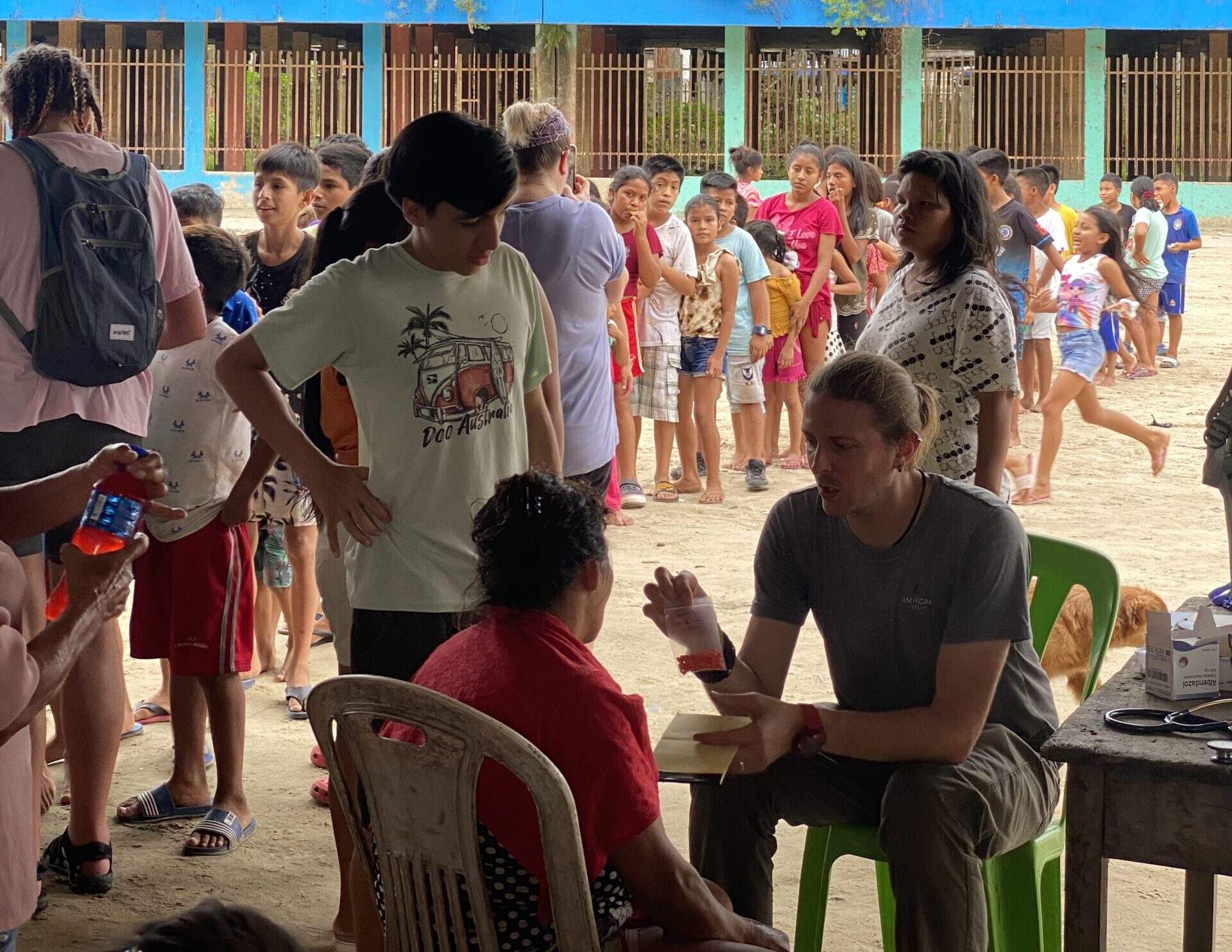
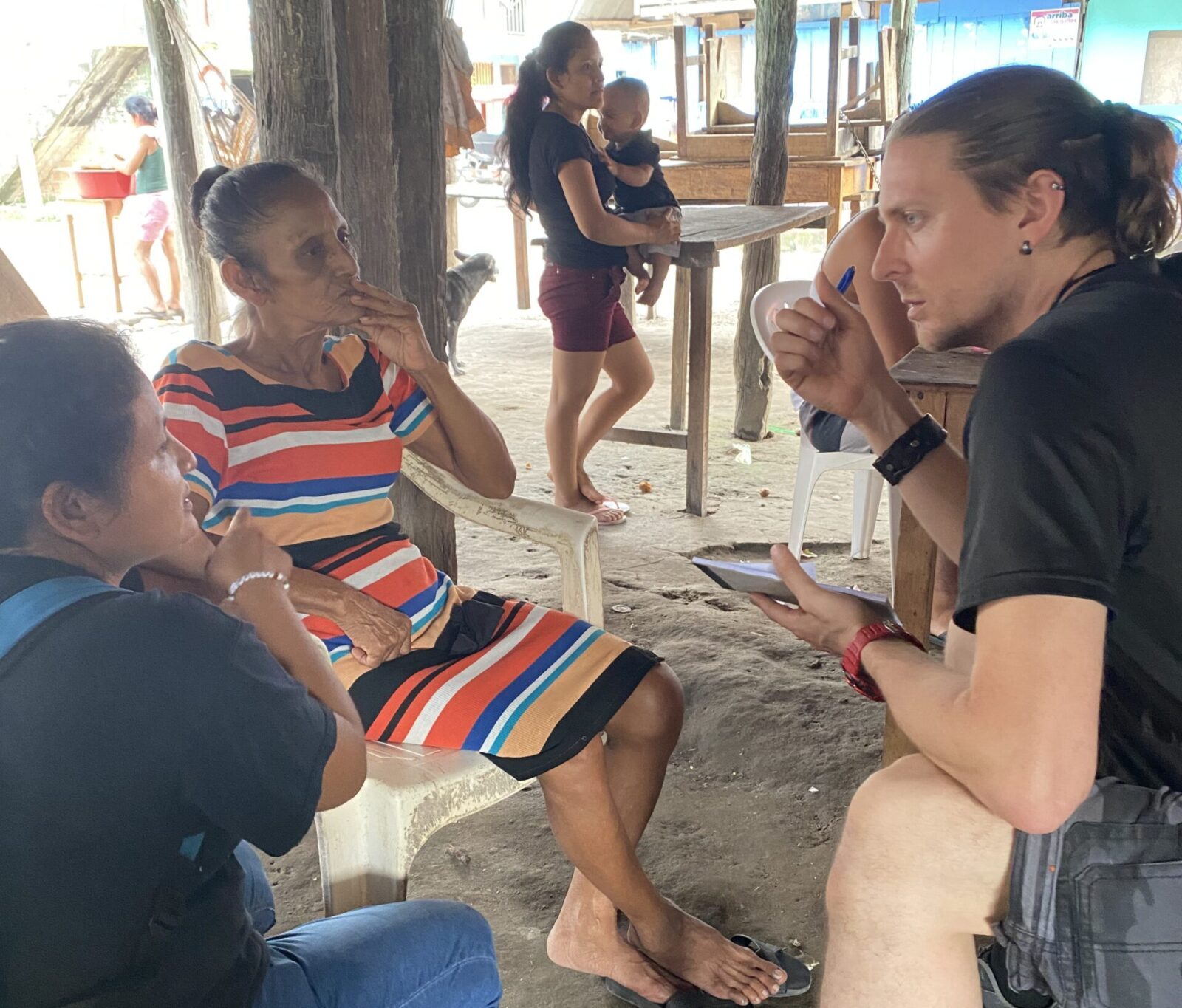
One of the things we did in Peru 2023 was to hold medical clinics.  In fact, one of the things Overseas Missions has done on many of their trips is to hold medical clinics as an outreach method.  We give people actual medical treatment to the extent we can, then we send everyone to our prayer team to get prayer, and, no exaggeration, almost everyone walks away healed.  As the saying goes, people don’t care how much you know until they know how much you care.  Taking time to meet people’s practical physical needs goes a long way to show that we care about people, which then creates an opportunity to minister God’s love to them.  For us, this isn’t just notches in a belt where we can pat ourselves on the back and feel we “accomplished something for God.”  In fact, this approach is one of the things I love about how Overseas Missions does things because it really is all about people and sharing God’s heart for them, not about being able to show a church group nice pictures after the fact to get more funding.  It’s all about finding the gold in the dust—and God demonstrated that to me during our clinics in a unique manner.

As a nurse, I am quite happy to use my existing skills and training to help create ministry opportunities.  Even if we didn’t do clinics I’d still go on these trips, but this is one way I can give back that not everyone is able to, and as an outreach method there is little that compares to it.  I remember in 2018 I was in India on a similar trip and because we were doing these clinics we were visited by hundreds of locals who otherwise would have passed by but never stopped for prayer.  After all, most residents of India believe in gods of some kind, so unless we do something unique they don’t really know why they should care about our God as compared to the ones they already follow.  One woman from that trip even told a team member, “You have loved me more than my gods ever have.”  That’s the God-kind of love and that’s what these trips are about. Now, back to the clinics.

Little about these clinics is glamorous.  We have bags full of medicine and vitamins, some reference books, an extremely limited number of resources with which to assess patients, and we have our eyes, hands, and stethoscopes.  We sit on plastic chairs, have our medicines laid out on dusty wooden tables and benches, and people make lines in literal dirt and dust to be seen.  And yet, time and time again, every time I would look at people’s skin for rashes, parasites, fungal infections, or any other gnarly thing they needed help with, their skin always had gold dust all over it.

Every.

Single.

Time.


It was ridiculous.


This is how amazing God is and how He does things far differently than we do.  God’s economy is not man’s economy.

Now, I didn’t check everyone’s skin, but for those I did, in the trash-filled, slummy, muddy, poor, dusty, dirty, overlooked area of Belen, Iquitos that we visited, all of them God had covered with His golden glory.  It was really obvious too.  The first one I saw was on a man who had this odd rash around his neck and shoulder area.  He wasn’t the kind of guy who uses sparkly makeup and skin lotion either—he was a dude who lived in a poor area and wasn’t about to waste money on that kind of stuff, and certainly he wouldn’t use it as a treatment for a skin rash.  It surprised me so much that I had the other nurse and our translator look at it as well.  But it didn’t stop there, or with him.  A kid with Ringworm?  It was a kid with ringworm covered in a thin layer of gold dust.  Unidentified rashes?  They were unidentified and yet covered in a light dusting of golden glory.

The one that surprised me the most, and I tell this story in detail in this article, was the woman who had a tumor on her ankle, and the intensity of the gold dust on her tumor-covered ankle was the most of anyone I had seen the entire time we were there.

I will be meditating on this in the future to truly understand what God was saying and doing here because I don’t think I truly have grasped the depths of what He wants to show me in this particular way He manifested His presence.  And I don’t say this because the gold dust miracle is new to me, because it isn’t.  I will eventually publish, possibly even later this year, a book called Gold from Heaven that will discuss this miracle.  But there is something specific and unique about this time and place that God chose to do it and I hope to gain better understanding of it.  But for whatever the reason that God decided to show His glory off in this manner it was spectacular.

You see, I love this miracle, but I wasn’t asking for it.  We had been praying for the sick and the injured to be healed all week long, not for gold dust to appear on their blemished skin.  He WAS been healing almost everyone we prayed for, but this both delighted me and caught me off-guard because it seemed so pointless and was so beautiful all at the same time.  Like I said before, God’s economy isn’t man’s economy and the way He does things is so different than our methods.  We are always looking for some specific way that the miracle is going to “preach the gospel” and if we can’t point to how it gets people to say a sinner’s prayer or get miraculously healed or some such thing then we tend to reason that it can’t be God or that He must be confused somehow because we have ideas of what God really cares about and none of these unique miracles make the list.  But God is interested in removing our limitation thinking, not operating inside of it just to keep us happy.  Furthermore, God isn’t limited to either healing the sick or manifesting gold dust as detractors tend to think.  No, the Creator of the entire cosmos who spoke creation into being with a single word is more than capable of doing both and tons more at the same time.

I was excited to see what God did at these clinics, through all of the Peru 2023 trip, and what He will continue to do in the future.  He is continuing to teach us new things and transform our ideas of who He is and what He is like,  I firmly believe that we must learn to experience His opulence in these kinds of ways, whether things like finding gold in the dust of poor slums that far outshine our idea of extravagance or in other ways that He chooses to reveal His goodness, there is one thing that is certain in all of this.  Jesus is alive and He will stop at nothing to display His love and goodness to all of us!

Training a Son of Our Father To Heal the Sick

One of the things we did in Peru 2023 with Overseas Missions was hold medical clinics, which, being a nurse, I play a role in.  The clinic process usually involves seeing patients, assessing their needs, giving medications where possible, then sending the problem list (written on a piece of paper with their name) to the prayer team to pray for the problems.  The results are pretty fantastic—almost everyone who goes through the clinic and gets prayer gets healed.  Because we are in a non-English-speaking country, however, that means we have to use translators because most of the team doesn’t speak the local language which, on this trip, was Spanish.  Our leader made some arrangements with locals he is in relationship with, and one of the translators, Jonathan, was the son of a local Iquitos pastor.

He did a fabulous job translating for us the entire time we were in Peru.  And although Jonathan was a pastor’s son, he wasn’t accustomed to praying for the sick (to be fair, I am the son of an Episcopal priest and I wasn’t raised to pray for the sick either).  So, while most of what the nurses in the clinic did was identify and treat physical problems and send people to the prayer team, I had a few times I felt the Holy Spirit nudge me to have us pray—so mostly I had Jonathan do it.  He was uncomfortable at first (he told me, but it was pretty obvious even if he hadn’t said anything), but he did great and was willing to push himself out of his comfort zone.  It probably helped a bit that for everyone he prayed for, their pain gradually left as well, so he could see the results of his prayers in real-time.

Now, when it comes to praying for the sick, I have a bit of a mental algorithm I go through in my head while talking to the Holy Spirit and just trying to be generally aware to spiritually discern what God is saying and doing, so I made sure to tell Jonathan my process, and I’ll share that here as well.

First, when it comes to heal the sick I begin with a prayer of command.  Something simple like, “All pain, leave now in the name of Jesus.”  You see, in Matthew 28:18-19 Jesus told his disciples that He had received all authority in heaven and earth, then delegated the disciples to go and exercise that authority on His behalf.  So, when praying for the sick the first thing I do is engage my authority and release power to heal, and expect it to be done in faith. Then, where possible, I have the person test it out and see if they can tell a difference.

After praying, one of three things will happen:  it will get better, get worse, or stay the same (or they may not be able to tell, so in that case I assume it has remained the same).

  1. If it gets worse, it’s a demon, so then I cast out demons.
  2. If it gets better but not all-better then God is actively healing them in that moment and I pray again.
  3. If it stays the same then I pray again because even Jesus prayed twice (Mark 8:22-25).
  4. And if it gets all-better then they’re healed. Give them a hug and let them know God loves them.


The rest of the prayer session tends to continue in a similar manner, with me praying then identifying what is happening, then adjusting from there.  If we hit blockages where nothing is happening after praying multiple times or if they have been gradually getting healed and it stops, then I cast out demons.  Once I have done that if it still plateaus, then I am talking to the Holy Spirit to see if there are emotional issues or curses or something else that are interfering with what we are praying, deal with that issue, then ideally go back to my prayer process again until they are fully healed.

Since Jonathan eventually plans to be a doctor anyway, I taught him this algorithm to him since it’s largely based on how I problem-solve as a nurse anyway, and figured it would be a good fit for him.  Then, as we prayed for people, I coached him through the process, asking him what he saw, what he thought we should do next, etc.  Finally, in keeping with the prayer of power and authority, I continued to remind him that he is a son of the Most High God and that Sons of the Kingdom don’t ask for creation to obey us—we command it to.

We practiced this healing prayer process both during the clinics infrequently with patients and also at a few healing prayer services we did while in Iquitos.  While praying together, Jonathan and I saw God heal blindness, deafness, and a number of other less-problematic conditions, but the last patient we saw on the last clinic day was a pretty special circumstance that beat out all of those.

On the final day of the clinic, we spoke to a young woman who’s main complaint was knee pain.  Seeing that she was the last patient, I had Jonathan pray for her, and the pain left instantly.  After praying for her knee and giving her antiparasitics for her family, vitamins, and some other medications, I observed that her ankle looked really strange, something she hadn’t mentioned anything about.  It looked at first glance like she had broken it sometime in the past and it had healed very poorly, as it was swollen and misshapen.  Upon asking her, it turned out that she had an ankle tumor.  I mean, I would have led with that, but people can be funny.

Now, while I inspected her ankle I noticed something that was impossible to miss because of how glaringly obvious it was.  This young woman’s ankle and the tumor on it were absolutely covered in gold dust!  We had seen other patients in the clinics and everyone whose skin we inspected for a skin problem had supernatural gold dust on their skin problem, but on this woman’s ankle it was thicker and just more somehow.  I showed Jonathan and then showed the woman—and explained it was a miracle from heaven (milagro de cielo) and a sign that God wanted to heal her body.  With that, we began to pray.

As you can probably guess, I had Jonathan pray for her.  I began by having her rate her pain and move her ankle so we could observe how much range of motion she had (another way to evaluate change when healing the sick).  Jonathan liked to pray long, flowery prayers with a bunch of “Father Gods” thrown in there so I told him to pray a super short prayer this time.  I had him say “Pain, leave in the name of Jesus.” He prayed, and some of the pain left.  After praying she said it felt like something was “grabbing her ankle,” so I had him command “Demon get out and all swelling go in the name of Jesus.”  He did, the demon left, the rest of the pain went, and as we continued to take turns praying over the next few minutes, the swelling visibly reduced to about half the size!  Her pain was gone, and her range of motion in the ankle had improved significantly.

We had to close up right after this as it was getting dark, or I would have continued to pray more because God was actively healing this woman’s body and removing the tumor and its effects!  And while I preferred to continue praying, I could also trust that God would continue the work that He had started to begin with.  After all, covering her tumor in gold dust wasn’t my idea—it was His.  This precious woman was crying by the time we were done because she could tell that God was touching her body.  It was so beautiful to see her moved by God’s gift to her, and I simply extended my faith in trust that God would finish the work over the next few days.

That miracle was pretty awesome, but almost as awesome to me was helping train up another Son of our Father to heal the sick and destroy works of darkness.  After all, if in a week’s time Jonathan saw the sick healed, blindness and deafness healed, and he even saw a tumor shrink at his prayer of command, what else is possible when partnering as a Son with our Heavenly Father?  Nothing is impossible with God!

Restoring Communion with the Animal Kingdom Part 2: Mindsets and Personhood

In Part 1 of this subject we discussed the responsibility that we carry toward the Animal Kingdom and how walking in a greater measure of communion with that Kingdom will cause us to need to bear more responsibility for them than we do currently. If you haven’t read it, you can catch up here: Restoring Communion with the Animal Kingdom Part 1: Responsibility and Cost. Today we are going to talk a bit about the personhood of animals and how we need to shift our mindsets to match with what is actually true, not what we have tended to believe previously. We will also be looking a bit more into what this will cost us to properly steward in the Kingdom of God.

I was giving our dog Seraphina a shower recently with flea shampoo and Sunshine was mentioning how she thinks I’m better with the dog (as far as how I treat her) than Sunshine is. Not that Sunshine is bad or abusive in any way—just that she thinks I tolerate and manage the dog’s behavior better. I replied that I think it’s probably because I recognize the dog has her own thoughts, will, personality, and emotions, and I don’t think we always take that into account enough as people. Sunshine said, “Well yeah, but she’s still just a dog.”

I replied, “Yeah, she’s a dog, but that’s exactly my point. What if part of our problem is that we relegate her to ‘just a dog’ status and ignore her will, emotions, and intellect?” It took a bit of convincing to get her to believe that dogs have a mind, will, and emotions (and I’m still not sure she’s entirely convinced), but it got me thinking.  Before going further, I’ll explain to you what I pointed out to my wife about animals having a mind, will, and emotions. Regarding Seraphina’s mind, we have the ability to train her to do things. She knows how to recognize certain commands and words, such as “outside”, “go home”, “crate”, “potty”, “Seraphina”, “puppy”, “food”, “hungry”, “no”, and more. Not only can she recognize these words, but she knows what they mean and in some cases what behavior is expected of her when we say those words to her. This requires intellect, or said another way, a mind.

As for Seraphina’s will, that is clearly evident in her behaviors, especially when we take into account the fact that she does have a mind and can understand some of what we tell her. When she is playing outside on our property and we tell her to “go home,” she knows she is supposed to, well, go home. The thing is, when she hears us tell her that, stops, looks at us, and then runs in the opposite direction she is enacting her will. A rebellious will mind you, but a will nonetheless.
Now for the emotions. When we first got Seraphina as a puppy, she had clearly been mistreated. It took a week before she started playing like a normal puppy would do and it wasn’t because she had some kind of developmental delay—it was because she was too afraid. I had to reach into her crate and pull her out of it and we would take turns holding her on our laps while she laid there shaking until she realized we weren’t going to hurt her. She wouldn’t take food from our hands for a while and we had to stop touching the food and move away before she would eat it. This animal was experiencing high levels of fear. Now, this is only possible if animals can experience emotions because fear is an emotion. Seraphina likewise experiences happiness, sadness, hope, disappointment, and other emotions as well, and if one observes her long enough, these various emotions become visibly evident. This is what I explained to my wife about our dog, but the same matters apply to all other animals.

In reality, the main difference we see between a dog and another animal, such as a beetle, is the level of intellect available. Theoretically all animals possess a mind, will, and emotions, but what allows them to display and/or experience a greater range of those things has everything to do with intellect or brainpower, or said another way, the size and complexity of their brain. Now, here’s where things get trippy. The human soul consists of a mind, will, and emotions, and as I have already proven, animals have the same. The level of intelligence they have, the intellect of their mind, will vary, but they still have one. The thing that’s fascinating is that when we realize that the human mind is not stored in the brain but the brain is the physical interface for the mind and the body, then it means that animals also have a soul that exists in a soul dimension similar to how we do (While some might like to use Greek and Hebrew to argue with me about this, I’m not talking about the spirit of the animal, I’m talking about their soul, and they aren’t the same thing. Argument over.).

Now, what would happen if we shifted our mindset and actually believe that animals have a mind, will, and emotions, have intellect, personality, and desires, and then treated them accordingly? I’m not even talking about if we could talk to each other, like I suggested in the prior installment, but what would it look like? How would we shift how we treat animals when we understand more about how they are made and what they experience? I believe if we truly understood this and changed our interactions with animals, we might see a difference in how they interact with us.

Now, I want us to come back around and take another look at this subject of cost. What price will we have to pay to communicate with animals and restore our relationship with the Animal Kingdom? Keep in mind as I discuss this that I’m not saying we should shy away from wanting things due to the price that may come as a result, but I do think it is important to think things through before we dive headlong forward without preparation. Luke 14:28-30 “Suppose one of you wants to build a tower. Won’t you first sit down and estimate the cost to see if you have enough money to complete it? For if you lay the foundation and are not able to finish it, everyone who sees it will ridicule you, saying, ‘This person began to build and wasn’t able to finish.’” If we want to steward the gift, we need to consider the price.

When we understand that animals have intellect and personality and have their own feelings and desires and then we are able to talk to them, what will that change for us? Let me throw out some ideas to consider—things that might ‘cost’ if we really could understand and communicate with animals like we are talking about. Going to the Veterinarian’s office might prove traumatic, as you will be exposed to the fear and pain of the animals present. An animal shelter would be even harder to go to, much less work at. Depending on how the animals are treated, the Pet Store, Zoo, and Circus might also become off-limits as well. If you’re a hunter, you might give up hunting simply because when you hear the dying cries of the animal you just shot, it will mean a lot more than it did before. Animals won’t just be ‘dumb beasts’ anymore to you – they will be your friends. If you’re a meat-cattle farmer, you’re probably going to need to find a new profession. Try telling all your animal- friends that you’re going to have to kill them once they get big enough. I mean, I’m sure they’ll understand, right?
This may sound entirely overboard to some and it may seem these things won’t matter much, but think again. Animals don’t just communicate using words like we do, and they certainly don’t use human-language when speaking to us. The communication is at its root soul-to-soul or spirit-to-spirit, whether it sounds like we hear them with our physical ears or not. If we shoot an animal with earplugs in, we may still hear their dying cries because it isn’t limited to the audible range, and as such simply going out of physical earshot is no guarantee either.

How do I know any of this? Have I had animals speak to me directly? Not that I recall. But I know others who have, and I have had enough experiences talking with plants, stars, angels and other non-physical beings that I have a few clues that indicate this is how it works. I have also experienced animals responding to my thoughts or words even if I didn’t hear theirs.

For one example of this, my wife and I were sitting in our car which we had parked on the side of a street. We were sitting in the car talking to each other with the sunroof closed but with the divider open so that we could see the glass above us. A black cat walked toward us, hopped up on the hood of the car, slowly walked up the front pane, over the top, and down the back, then hopped off and walked away a short distance. My wife and I both enjoyed this very much, as we got to observe the cat walk on the roof as well as the rest of the car. I even recall saying to her “I wish the cat would do that again – that was cool.” Within about 15 seconds the cat trotted over, hopped back up on the car hood, went quickly over the top and back down, and left. He/she looked back at us at one point and we both had the distinct feeling the cat was asking “There. Did that make you happy?” The cat was nice enough to humor our request, but it seemed like it found the request somewhat annoying. Clearly though, the cat heard our thought-request and complied when it was physically incapable of hearing us due to the windows being shut—and even if the windows had been open, the cat likely wouldn’t have understood my English. And yet, the cat did exactly what I wanted, meaning it understood what I wanted through nonverbal communication, proving my point.

I once had a dream that suggested there are many people out there who have had similar experiences communicating with animals, and that some do it regularly but have simply been unwilling to talk about it, especially in the Church, for fear of negative labels and derision from others. I firmly believe that people often don’t want to take risks and share things because they feel unsafe—and often times other people make it unsafe to share. My hope is that by opening this subject up we can help empower people to start conversations about this topic and walk forward into greater communion with the Animal Kingdoms together. Let’s get started!

Restoring Communion with the Animal Kingdom Part 1: Responsibility and Cost

There are many people out there who would like talk to animals. Or rather, I should say that want to hold conversations with animals (talking to them isn’t hard, but understanding when they talk back is another matter entirely). In addition to just talking to animals, there is a desire for the separation between Man and the Animal Kingdoms to be removed, that the veil between the two would be torn once and for all.

The Bible says that there will be a day when the lion will lie down with the lamb, and a little child will lead them. This is typically relegated to a far-off future post-return of Jesus in the Second Coming. But the veil was torn over 2000 years ago and there is no longer a separation, so we can have connectedness and peace now. And while one could say that the temple veil represented separation between God and man only, I suggest that is not so. Jesus died to set us free from every curse and bondage and place that was less-than God’s intent, so it would stand that all separation of every kind brought in through the Fall of Man was dealt with, not just that of God and man.

The fear of Man was placed upon animals at a time when (I theorize) that there was a dietary deficiency as a result of the flood. It is possible that it was the atmospheric change that scientists have theorized that caused this change, or it may simply have been that so much of the earth was covered with water that many plants simply died after that length of time and some of those plants became extinct. It is possible that any number of other things transpired to cause this change—we will never know outside of divine revelation.

What we do know is that as is recorded in Genesis, after the Flood the rules changed. Animal began to eat animal (suggesting that all animals had been herbivores prior), and Man started to eat animals as well. I imagine it was due to survival needs and in order to protect creation that God placed fear of Man into animals. And why not? After all, He loves animals too. It would be uncharacteristic of God to tell mankind to make animals a target and then in turn give animals no internal warning system whatsoever to let them know Man is now a dangerous species. Due to this warning system, however, animals run away from people unless they as a species have been tamed over a long period of time.

If walking in a forest, deer usually run away when they see a person. If a squirrel or bird is hanging out at a bird-feeder, they will typically run or fly away when a human approaches, even if the person approaches slowly and with no negative feelings directed toward that animal. It’s almost as if something about our very presence tells the animals to “get away.” I believe it is time for this fear to be removed not just conceptually, but in practice.

Before we take another step to start asking God to remove that fear, I think we need to look at some things honestly. For starters, why do we want this ability with animals? If it’s because we “want to,” because we love animals, or because we have some other positive, non-threatening reason, then it stands to reason that pursuing this ability is worthwhile. After all, Jesus purchased it at a very high price, so why should we not live in it? However, this ability doesn’t come free of charge–anything that God gives us comes with a measure of responsibility. An example of this is our diet—do we eat meat? And are there hunters among us?

If the second of the above answers was “yes,” we are at the greatest risk for misusing and abusing this capacity. If you think about it, are we really going to lure animals into a sense of false security only to then trap or kill them and eat them? This is probably the very reason why God put fear there in the first place. If we decide we want to live at peace with the Animal Kingdom then we actually have to live at peace with them. I’m not saying one has to become a 100% raw-food vegan, but in reality if we want to live in a manner that respects the lives of animals then we must treat them differently than we have collectively in the past.

Animals are a large part of our economy, not just the food chain. Almost every restaurant in the U.S. alone serves meat in 80% or more of its food dishes, and often the percentage is much higher than that. There are some farmers who raise nothing but meat-animals, and there are many jobs that do nothing but handle dead animal-flesh. Some examples: taxidermist, butcher, meat-attendant-at-grocery-store, meat packing company employee, food-processor-of-dried-meat-products-employee, professional game hunter, restaurant cook/chef, rancher/ranch hand, trucker-who-ships-meat-and-livestock. If we stopped eating meat, we would actually remove thousands and thousands of jobs from the economy. While those people would eventually find other jobs or work in other similar job-areas that don’t involve meat, the point is that carnivorous behavior is actually quite ingrained into our culture. To take a step away from that and choose to be vegetarian actually limits food choices greatly, which is a consideration we have to look at. Even if we all decided to go vegetarian (which isn’t likely), there would have to be some kind of scalability to the process to phase out of old ways and into new ones. In reality, if we start collectively changing our habits now, it will likely take a generation (about 20+ years) before we see a significant difference.

A few years ago I was preaching at a gathering in Washington State and as per the custom of that group, they gathered together prior to the meeting for food and fellowship potluck-style. I didn’t tell anyone at the time that I was vegetarian (I’m not currently but was then), and I didn’t believe in imposing my dietary choices on other people for a single evening. But as a result there was actually only one food item there that I could eat—macaroni and cheese. And don’t get me wrong—I like mac and cheese. But with a large gathering and literally only one food item that wasn’t meat, it kind of makes the point I’m getting at. And I’m not just talking about foods that have touched meat or have pieces of meat in them. I mean that every one of the non-mac-and-cheese items offered were all different forms of cooked meat—thus there was no “eating around it.” And please don’t hear this as a complaint—I chose not to make my food preferences known, and I enjoyed both my meal and the company I kept while eating it. I am using this example to point out that if we want to live at peace with the Animal Kingdom, we will need to make some mental shifts in our lives, resulting in some physical shifts and possibly dietary changes as well.

Let’s revisit the responsibility issue of a greater dominion over the Animal Kingdom and ability to communicate with them better. Let me explain what I mean—for every area of supernatural connection that we gain, whether it be with Animals, the Nature Kingdom, Stellar Spirits, or some other group, we open ourselves up to a greater measure of responsibility. For example, if I can talk to animals then when they approach me with problems, it stands to reason that I will need to at least attempt to do something about it. Additionally, many animals habitats worldwide have been drastically altered and managed by humans, and as such they are going to need our assistance for a number of the problems they run into because we’re often the ones that caused them to begin with.

Being Dr. Dolittle could have its high points, and I’m sure it does, but it also comes with its own price. What if we were busy trying to order our pets around and it told us it didn’t like it when we talked to it like that? How would we handle a rebuke from an animal? I’d be shocked if Balaam was expecting the response he got from his donkey when he was busy beating it. And to be honest, Balaam was pretty blessed that he got a donkey who wasn’t inclined to fits of rage, as kicks from donkey hindquarters can be deadly when aimed properly. And what are we going to do when the deer take over our yard and eat our garden to shreds during hunting season because they’re running from the hunters and know they’re safe at our place?
Or what if our neighbor’s cat comes for a visit and tells us what he sees the father doing to the child late at night when mother is sleeping and he thinks no one is watching? How do we handle that? Precious few authorities on the planet would believe us if we said “the cat told me the father is molesting his child”, and it certainly won’t stand up in court of law. I get that got real dark real fast, but these are the kinds of problems we will actually run into. Are we prepared for them?

I’m not saying we should shy away from wanting things due to the price that may come as a result, but I do think it is important to think things through before we dive headlong forward without preparation. Luke 14:28-30 “Suppose one of you wants to build a tower. Won’t you first sit down and estimate the cost to see if you have enough money to complete it? For if you lay the foundation and are not able to finish it, everyone who sees it will ridicule you, saying, ‘This person began to build and wasn’t able to finish.’” If we want to discover how to restore communion with the Animal Kingdom, I believe it is good to do so, as it is part of what Jesus purchased for us. I believe that in the same way God is restoring the revelation of life and immortality to us, God is also restoring our ability to communicate with the Animal Kingdom—but I think we need to also consider what it will cost us. It is my hope that by discussing this, we will be able to reason through some of the things we need to learn and understand as God releases this to us so that we can properly apprehend, live in, and steward the gift.
We will be covering more about this subject in Part 2, dealing with Mindsets and Personhood. Come join us next week!


Emergency Preparedness is Highly Spiritual

In my teens I spent a good amount of time in the Boy Scouts, including two summers as a camp counselor at a Boy Scout Camp. There was a lot that I learned during that phase of my life having to do with the outdoors, swimming, first aid, and more, but one thing that always stuck with me was the motto “Be Prepared.” There are a variety of ways one can follow that ethos, from emergency preparedness to financial preparedness and more, but I want us to consider something that follows more closely with the subjects on this site: spiritual preparedness.

I realized years ago that in any given situation I cannot guarantee that anyone else​ will walk in the anointing, identity, and authority as a son or daughter of God to get the job done in whatever the current circumstance is. And while I think it is healthy to a degree to rely on others in the Body of Christ, situationally, that is not always possible or even wise. Thus, I decided that I must grow to become whatever I must become in any situation to solve Earth’s problems with Heaven’s power and grace.

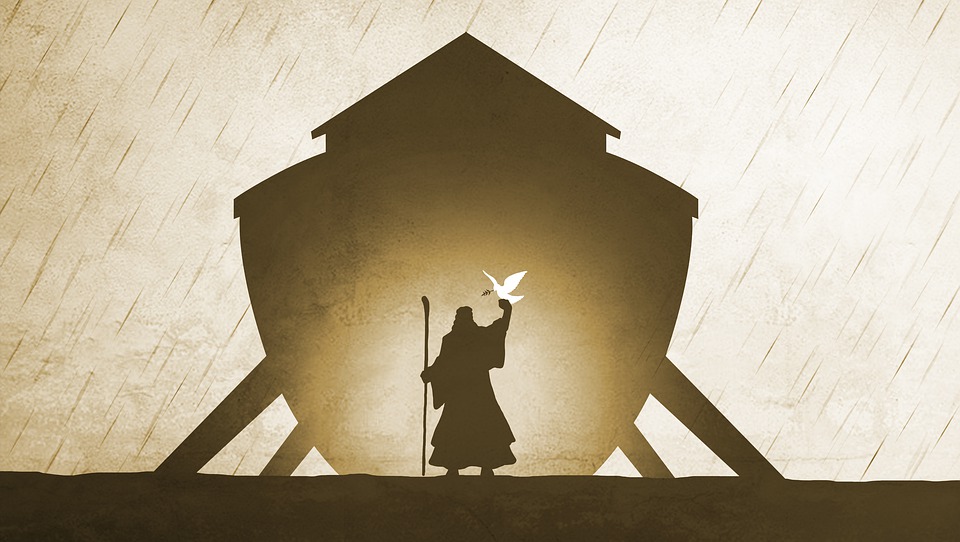
While that may sound arrogant to some, I think it actually aligns pretty closely with the nature of our Heavenly Dad—the one who goes by the name “Jehovah Jireh” or “the God who Provides.” I had a Mormon patient share with me once that God’s name “Jehovah Jireh” actually is better translated as “I Will Become Whatever I Must Become [to meet the need].” If we consider that God is determined to become for us whatever we need in any given situation, is it really too much to consider that we, being made in His likeness, are to walk in the same nature as our Father?  And while one can make the argument that God will always provide in any situation, how did God provide for the famine in Egypt?  He sent Joseph a dream so he had seven years to prepare.  For Noah?  He gave him over 100 years to build an ark.  Sometimes, faith looks like doing something in advance.

[box] Sometimes, faith looks like doing something in advance.[/box]

Fasting is a great discipline, although difficult at times, but when tragedy strikes is really not the best time to begin fasting. In fact, I think it is far better to have lived a general lifestyle that includes fasting if for no other reason than to be prepared. Prayer is a great discipline, but is it really effective to begin developing that lifestyle once a problem hits? I suggest it is far better to have developed that discipline and have those lines of communication open prior to issues springing up. Walking in spiritual gifts, the anointing, power, authority, identity and more are all really good things​ for us to do. But is the time to begin doing those things really the moment when problems befall us and those around us, or is it wiser to be like the Wise Virgins in the parable Jesus told and be prepared for future situations?

I suspect we have entered an era where there is little time left to prepare for the things that are coming our way. There is tyranny in the air, many opportunities for intentionally-manufactured economic ruin for individuals, families, and even different regions of the world. Certain sicknesses have been unleashed on the world to intentionally create ill health and death, and the “cures” for those diseases may end up being just as deadly. The time to prepare for all of these things and the many more possibilities I have not named is not someday in the far off future. The best time to prepare is years ago, but the next best time​ to prepare is begin today.​

So what does this preparation look like? What options do we have? Let me give you some suggestions—some of them are things I already do, some are things I need to do more of myself, and this is a reminder to me to do the same as well! The suggestions below are not exhaustive, but they will get you started on the road to new levels of spiritual power, new levels of mental preparation, and new levels of walking in the authority and anointing that God prepared in advance for you to walk in, to release His love and power into this earth!

  • Get intentional about fasting and prayer. The book Reece Howells: Intercessor is a great encourager in this area.
  • Spend time engaging in impartation of spiritual gifts with others. To learn more about this subject, read my book The Power of Impartation and then put the principles into action.
  • Transform your beliefs to reflect the Abundant Life that Jesus purchased for us. Learn about God’s desire to heal every sick person and raise every dead person back to life in my book Faith To Raise The Dead, and begin to practice and engage the material in your daily life.
  • Get intentional about transforming and renewing your mind. A great resource to do this is Chris Blackeby on Youtube.
  • Build your faith for the miraculous provision of Heaven. My two books Gemstones From Heaven and Feathers From Heaven are good ways to encourage this. Ruth Ward Heflin’s Glory books are faith builders, as is the autobiography of George Muller.  There are many fantastic books out there—find them, read them, and let your faith and expectation grow!
  • Get inner healing and deliverance. An old classic is Derek Prince’s book They Shall Expel Demons—the principles and wisdom in that book are timeless. I have coauthored the book Broken to Whole which deals with how we engage healing the broken and fractured parts of our soul as a result of pain and trauma. There are many other fantastic books and resources out there, but however you do it, spend time with intentional inner healing and deliverance prayer whether with someone else or by yourself and release the pain in your heart to God. My friend Praying Medic has a really good book called Emotional Healing in 3 Easy Steps that takes a lot of knowledge and “how to” and compacts it into a simple little prayer that anyone can use in just a few minutes. I highly encourage this method.
  • Ask the Lord what other areas you need to prepare in, and ask Him to lead and guide you to the resources and methods and means with which to get ready.

What are some ways you prepare for things spiritually?


Pursuit Leads To Power

[et_pb_section fb_built=”1″ _builder_version=”3.22″][et_pb_row _builder_version=”3.25″ background_size=”initial” background_position=”top_left” background_repeat=”repeat”][et_pb_column type=”4_4″ _builder_version=”3.25″ custom_padding=”|||” custom_padding__hover=”|||”][et_pb_text _builder_version=”3.27.4″ background_size=”initial” background_position=”top_left” background_repeat=”repeat”]

I grew up in the Episcopal Church (my dad is an Episcopal priest), and was introduced to the Charismatic as a whole when I was about 20 years old and in college. Early on, I began a wild pursuit of the miraculous, and during this time I heard lots of different opinions about how to walk in signs, wonders, and miracles, and I want to share with you all some observations and lessons I have learned over the past decade and a half since.

First, I would often get advice from people about how to operate in miracles. They included a lot of random, often contradictory, at times unscriptural, and occasionally downright nonsensical suggestions:

1. Pray to walk in healing, signs, wonders, and miracles
2. Pray to know God
3. Believe in faith that I already have it
4. Praise God for the fact that I already walk in it all even if I don’t really, as an act of faith that I will at some point
5. Stop praying for miracles because I need to get to know God instead
6. Spend time with Jesus, because that’s what the disciples did that set them apart
7. Seek God’s face instead of His hand
8. Go witness/evangelize to people because signs, wonders, and miracles are the work of the Evangelist.
9. Only some people can do miracles, so if I am an Apostle then it will happen, but otherwise it’s just not God’s will for my life.
10. In the Old Testament it was Prophets who operated in signs, wonders, and miracles, so Prophets should be the ones operating in them today.
11. Get filled with the Holy Spirit because Acts 1 says that’s how I will be filled with power.
12. Since I have already been baptized in the Holy Spirit I am good and have all I need, especially since the Bible says I have already been given everything pertaining to life and godliness.
13. Stop being so focused on miracles, as they will lead you astray, and get back to the Word.
14. Get in the Word because reading the Bible will give me an impartation for the miraculous.
15. Pray in tongues
16. Praise in tongues (in this context, they just meant meant “do tongues to music”)

I’m sure there were more, but I hope you see the problem here. That’s over a dozen different things that one should or shouldn’t do to walk in miracles—and while some of the suggestions above are really good, half the time they contradict one another or just make no sense. Understandably, this left me awfully confused about which of the different things I should be doing to walk in miracles, and 15 years later I still greatly desire to do more miracles in spite of having seen some cool healings, signs, wonders, and miracles already.

It took me a number of years to wade through all of the well-intentioned theological double-speak because I was so new to the prophetic and the power of the Holy Spirit, but I eventually figured out some things. One of the things that really strikes me as incredibly illogical are the people who say things like “Just follow Jesus and it will happen” or “Seek His face and not his Hand. Seek the giver and not the gift.” The Bible doesn’t actually agree.

In fact, in Matthew 7:7-11 it says, “Ask and it will be given to you; seek and you will find; knock and the door will be opened to you. For everyone who asks receives; the one who seeks finds; and to the one who knocks, the door will be opened.  Which of you, if your son asks for bread, will give him a stone? Or if he asks for a fish, will give him a snake? If you, then, though you are evil, know how to give good gifts to your children, how much more will your Father in heaven give good gifts to those who ask him!”

Think about that. The Bible (and not just any part but Jesus personally) literally instructs us to ask for things we desire, and that if we do, we will receive them. Anyone who tells you to stop seeking after the miraculous, kindly and gently ignore their advice.

The other one that really gets me is “Don’t focus on that stuff (the miraculous) because it will draw you away from God if you focus on it too much.” I’m sorry, but Jesus spent multiple years going around teaching his disciples to heal and do signs, wonders, and miracles, and suddenly when I want to do the same things Jesus did, it’s a problem that I focus on it and want to walk in it?? Jesus certainly didn’t agree with that line of thinking. In John 14 Jesus said that we should believe in him, and if we can’t take him at his own word, then we should believe on the *evidence* of the miracles that he did. As followers of Jesus, we are supposed to walk in miracles.

My friend Steve once pointed out on social media that while Mark 16 does say that “these signs will follow those who believe,” it’s not meant to be a passive thing but something that brings action. Think of it this way. Let’s assume for a minute that the Holy Spirit dwells within each one of us (which He does), and that because of that we can all operate in the miraculous (which we can). If I were to assume that because I’m a nurse that all of my patients will improve but I never actually do any interventions to help them get better, it would be absurd to expect positive results. Likewise, if we assume we can walk in miracles but never exert any effort to actually do so, it would be improbable to expect that we will see any occur.

I’m not saying one has to purposefully enter dangerous situations or go evangelize on random city streets for hours each day for miracles to occur (although both theoretically could yield some results). What I am saying is that if we never step out to pray for anything to occur, why are we expecting to sit on our laurels and have miracles just fall in our laps? Passivity has never been the way of the Kingdom of God. John 11:12 says, “And from the days of John the Baptist until now the kingdom of heaven suffers violence, and the violent take it by force.” If we want to see miracles happen, we need to actually do some miracle-ing. Not-praying for them, not-expecting them to happen, not-seeking them, not-talking about them, not-doing-anything-related-to-them is a highly unreliable way to experience the power of God, whereas if we do the opposite of all of those things, we will see God move.

The Christian life is all about partnership with God. When God wants to do things, He partners with us. In the same vein, miracles shouldn’t only be a passive thing we wait to have occur to us. Certainly there are times God will do things in times and ways we don’t expect, but as a whole we should be actively engaging the supernatural instead of waiting for it to happen to us.

[/et_pb_text][et_pb_code admin_label=”Code”][/et_pb_code][et_pb_comments admin_label=”Comments” _builder_version=”3.16″ use_border_color=”off” border_color=”#ffffff” border_style=”solid” button_letter_spacing_hover=”0″ button_text_size__hover_enabled=”off” button_one_text_size__hover_enabled=”off” button_two_text_size__hover_enabled=”off” button_text_color__hover_enabled=”off” button_one_text_color__hover_enabled=”off” button_two_text_color__hover_enabled=”off” button_border_width__hover_enabled=”off” button_one_border_width__hover_enabled=”off” button_two_border_width__hover_enabled=”off” button_border_color__hover_enabled=”off” button_one_border_color__hover_enabled=”off” button_two_border_color__hover_enabled=”off” button_border_radius__hover_enabled=”off” button_one_border_radius__hover_enabled=”off” button_two_border_radius__hover_enabled=”off” button_letter_spacing__hover_enabled=”on” button_letter_spacing__hover=”0″ button_one_letter_spacing__hover_enabled=”off” button_two_letter_spacing__hover_enabled=”off” button_bg_color__hover_enabled=”off” button_one_bg_color__hover_enabled=”off” button_two_bg_color__hover_enabled=”off”][/et_pb_comments][/et_pb_column][/et_pb_row][/et_pb_section]

Privacy Preference Center