Do I Have God’s Permission?

As a Christian author, I network with other authors and writers, as well as those who aspire to publish in the future.  Some groups are Christian-writing focused, and one of the major blockages I observe Christian writers having is the issue of making sure we have “God’s permission” to write the things we want to say.  In some cases, this issue prevents people from ever sitting down to actually write the things that are on their heart.  I want us to take a look at this issue of permission from God and see what the Bible tells us about it, as this is a tactic the enemy uses to stop people from doing all that God has equipped them to accomplish.

In 2 Samuel 7 we see David talking to Nathan the Prophet, sharing his concern that God has given David a palace and victory over his enemies, but that God doesn’t have a place to reside.  That night, God spoke to Nathan and basically said “I’ve never needed, wanted, or asked for a physical temple.  Yet, David wants to build me one, so I will bless him greatly and I will let him get the materials and have his son build me a temple in the future.”  It was never in God’s heart to have a temple of stone to begin with, as He had always planned to commune directly with mankind.  And yet, when David voiced a desire in his heart of something he wanted to do *for* God, God spoke to the prophet and gave David the green light.

Why does this matter?

Sometimes we get so caught up in trying to “be in the middle of God’s will” that we don’t understand God will often adjust what He is doing or how He is doing it to match up with the desires in our hearts.  God didn’t need a temple.  He didn’t really want a temple any more than He wanted Israel to have kings.  But God gave David a desire in his heart and decided to make that a part of His divine plan, thereby letting David do all that was in his heart to do and simultaneously putting him in the center of God’s will for his life.

Often, we can ask God for permission on some project or in some area of our life and we hear nothing.  If God doesn’t clarify anything specific one way or another and it isn’t already explicitly clear in scripture one way or the other, I believe we can simply carry out what is in our hearts to do with wisdom. Even if God didn’t specifically say “Go ahead,” God has also not prohibited us.  If we look back at the Temple, God didn’t start that–David did.  But God saw what was in David’s heart and said “Okay, I can go with that.  Do what is in your heart to do for me.”

Elsewhere in scripture it says “God gives us the desires of our heart.”  That can be taken two ways–first, God fulfills our desires.  Second, the only reason those desires exist is because God put them there.  In either case, we cannot let our own fears stop us, and while I see this regularly with writing, it isn’t specific to writing.

There are so many different dreams and ideas people have that they never step out and make happen because they are afraid they will somehow be walking outside of God’s will for their life.  What they are forgetting is that all of life is meant to be a partnership with God.  God would walk in the Garden of Eden with Adam and Eve, not because God needed exercise, and not because God was trying to map out the garden.  He created every square inch and knew every leaf and root in the place.  God wasn’t walking there because He needed something—He was doing it to be with Adam and Eve and what they were doing.

I think we can all agree that we don’t want to live outside of God’s will, but my point here is that unless we are in blatant disobedience, God actually wants us to be creative, to explore, and to try new things.  God wants us to dream and step out and expand our horizons.  God doesn’t have a specific to-do list for each of us that He is keeping divinely hidden so we have to work really hard to search it out, hoping that we get it right, fearful that we don’t mess up.

If you have been holding back from doing something, whether writing a book or anything else, all because you are afraid of “walking outside of God’s will” then it is time to deal with the fear.  The world is waiting for you to be courageous, take a risk, and do what is in your heart to do for God.  If God hasn’t said “no” and it isn’t blatantly against what you already know God stands for, then you have permission.  God is looking to raise up mature sons and daughters who are able to maturely handle the word of righteousness and act accordingly.  We teach three year olds how to put clothes on, but we expect thirty year olds to be mature enough to buy their own clothes at stores of their choosing, dress themselves, and do their own laundry.  God is, in many ways, the same.  We don’t always need to be told what to do—sometimes God is waiting for us to do what we already know because He has given us sufficient instruction in the past.

God has already given you permission. It’s time to unleash your dreams.


Featured Image used with permission by my granddaughter Sage Rivers at Lupineandsage.com

 

Practical Tips To Engage the Flow of Revelation

[et_pb_section fb_built=”1″ _builder_version=”3.22″][et_pb_row _builder_version=”3.25″ background_size=”initial” background_position=”top_left” background_repeat=”repeat”][et_pb_column type=”4_4″ _builder_version=”3.25″ custom_padding=”|||” custom_padding__hover=”|||”][et_pb_text _builder_version=”4.0.10″ background_size=”initial” background_position=”top_left” background_repeat=”repeat” hover_enabled=”0″]As an author and spiritual teacher, I find the process of engaging the flow of revelation to be an important one.  I have found myself pondering at times what that special something is that turns something from knowledge or information into revelation insight that brings inner transformation.  At other times, I have questions about things that I simply don’t sufficiently understand, nor do I have anyone I can ask who gets it better than I do.  Thus, I have had to learn over time how to engage the flow of revelation from God.

Because I enjoy writing, one of the ways I have learned to engage the revelatory flow is to write.  Part of why this works is what I refer to as the Law of Focus, a subset of the Law of Sowing and Reaping.  This spiritual law basically states that whatever I focus on and engage, I attract to me.  In the process of focusing on a topic, I end up receiving revelation simply in the writing process.  I do also study the Bible and relevant material from others, but even as I ponder and study a subject, new ideas come to me.  Sometimes when I study I gain profound new understanding as my research turns into an interactive revelatory flow.

In reality, all information is knowable in the spirit, and anyone who knows how to access it can access revelation simply by wanting to.  However, multiple factors can influence how easily we do or do not receive that revelation.  If we want to engage revelatory flow, we should do things that position us under the spout where the revelation comes out.  Prayer and fasting are two tools we can use to help position ourselves, as is surrounding ourselves with others who are headed in the same direction.  However, at the end of the day much of what this all does is still make use of the Law of Focus.

While I do all of those things at times as well, this is why writing is such an important key for me.  I tend to process well when speaking out loud, but finding someone who wants to listen to me talk something out isn’t always possible, which is where writing comes in.  Another great way to do this is to teach or speak on a subject, but that is often limited to those who already have a platform of some kind.  While I understand that teaching a subject you might not fully grasp in order to learn about it might seem disingenuous, I believe in championing messages we have not yet fully apprehended.  I wrote about this in an article titled “Forerunners and Imposter Syndrome” which explains why I believe this can be important:

The apostle Paul ran into this same problem, to the point that he repeated himself twice when speaking to the Philippians about this in Philippians 3:12-14, saying, “Not that I have already obtained all this, or have already arrived at my goal, but I press on to take hold of that for which Christ Jesus took hold of me. Brothers and sisters, I do not consider myself yet to have taken hold of it. But one thing I do: Forgetting what is behind and straining toward what is ahead, 14 I press on toward the goal to win the prize for which God has called me heavenward in Christ Jesus.” Paul was very clear that he had not already attained the fullness of the revelation he was preaching, but he didn’t let it stop him from proclaiming the revelation.

I had a dream the other night that seemed to suggest there are two main ways God gives us a message He wants us to carry. The first is as a prophetic revelation, and this typically comes first. Prophetic messages are often those given by the forerunners, as they are speaking of realities that have not manifested as of yet. The second are apostolic messengers—those who have lived out the message, have struggled through the ups and downs as they have pioneered the experience, and who have become the living embodiment of that which they speak. Neither means of carrying a message is better than the other, nor is either inferior to the other; they are simply different. Apostolic messengers carry the experiences within them, while the prophetic messenger is often speaking of things he or she has yet to attain to. It is important to understand whether a message is prophetic or apostolic as defined above, as prophetic messages are those that place us in greater danger of Imposter syndrome.”

The point of releasing a prophetic message is that while we have not yet fully grasped or lived out the content of our message, by releasing the revelation we have, not only do we pull on heaven to give us more but we also help position others to do the same.

While not everyone is an author, teacher, or speaker, we can all make use of simple tools to engage the Law of Focus and activate the revelatory realm.  Journaling and discussion with others are two easy ways to do this.  Another option is to talk to an empty room.  I like to pace while I talk, and if I am on a long phone conversation I can be found doing laps inside the house or wearing a hole in the grass, and have done the same while practicing preaching messages.  While at first it feels a little strange to talk to no one, as long as I ignore the fact that I would look like a total idiot to anyone watching, all goes well and it is very fruitful.

Regardless of the method used, whether in public or private, there are a variety of different ways we can actively engage the flow of revelation which in turn will enhance our spiritual growth.

If you have other methods they use to engage revelatory flow, please share in the comments below and let us know!
[/et_pb_text][et_pb_code admin_label=”Code”][/et_pb_code][et_pb_comments admin_label=”Comments” _builder_version=”3.16″ use_border_color=”off” border_color=”#ffffff” border_style=”solid” button_letter_spacing_hover=”0″ button_text_size__hover_enabled=”off” button_one_text_size__hover_enabled=”off” button_two_text_size__hover_enabled=”off” button_text_color__hover_enabled=”off” button_one_text_color__hover_enabled=”off” button_two_text_color__hover_enabled=”off” button_border_width__hover_enabled=”off” button_one_border_width__hover_enabled=”off” button_two_border_width__hover_enabled=”off” button_border_color__hover_enabled=”off” button_one_border_color__hover_enabled=”off” button_two_border_color__hover_enabled=”off” button_border_radius__hover_enabled=”off” button_one_border_radius__hover_enabled=”off” button_two_border_radius__hover_enabled=”off” button_letter_spacing__hover_enabled=”on” button_letter_spacing__hover=”0″ button_one_letter_spacing__hover_enabled=”off” button_two_letter_spacing__hover_enabled=”off” button_bg_color__hover_enabled=”off” button_one_bg_color__hover_enabled=”off” button_two_bg_color__hover_enabled=”off”] [/et_pb_comments][/et_pb_column][/et_pb_row][/et_pb_section]

Books Writing Publishing

When Your Book Flops—Advice For Authors

[et_pb_section admin_label=”section”][et_pb_row admin_label=”row”][et_pb_column type=”4_4″][et_pb_text admin_label=”Text” background_layout=”light” text_orientation=”left” use_border_color=”off” border_color=”#ffffff” border_style=”solid” text_font_size=”15″]

Any time an author publishes a book, there are three possible outcomes:  it will perform amazingly well and sales will go through the roof, it will totally flop, or land somewhere in-between.  I suggest that most books end up in that nebulous middle-area, but unless one hits a bestseller with the first and makes a name for him or herself straight out of the gate, everyone has one that performs poorly.  This can be incredibly discouraging considering the time, energy, and monetary costs associated with publishing a book.  What do you do when you expect book sales to perform well and they don’t, and what can you do to fix it?

First, you have to look at the problem, because you can’t solve a problem unless you know what is causing it.  In this case there are really only three possibilities:  Price, Content, and Marketing.

Pricing is a bit of an art, rather than a science, but one can do a few simple things to make an educated guess.  First, what are successful authors in your genre selling their books for?  Make sure not to price higher than theirs, and consider pricing slightly lower to make up for any notoriety you may lack.  Second, do a general survey of prices based on book length.  If your book is two hundred pages then don’t charge what a five-hundred page book is priced for, and if your book is electronic it must be a lower price than a print version of the same length.  Look at all authors in the genre, not just well-known authors, because the majority of books in any genre are most likely going to be by lesser-known indie and/or self-published authors.

Once you have priced your book more appropriately, or decided that price wasn’t the problem, you need to look at the next item on the list:  book content.  In the case of content issues, the only thing you can do to fix it is go back to the drawing board and start over.  But what really IS the problem with the content?  If it is bad spelling and grammar, then you made a major rookie mistake—you must not have used an editor.

An editor is worth his or her weight in gold, taking what might otherwise be a “B”-level piece of writing and turn it into a masterpiece.  Editors catch spelling mistakes, turn passive-voice sentences into active-voice ones, break up run-ons and combine strings of simple sentences.  They are the equivalent of an interior decorator, taking whatever you are working with and sprucing it up until it pops.  If you haven’t used an editor, you have broken what I consider to be the cardinal rule of publishing, and you really will need to revisit your material.  Because editing can get expensive, make sure to use spell-check and grammar-check in your document, possibly get a subscription to a software that does some basic edit-checking for you (such as Grammarly), and do a round of edits yourself prior to handing it to someone else.  If you find flaws in your own work and fix them, the editor will be able to focus on other problems within the text, ultimately costing you less long-term and helping raise the level of your writing even higher.

Once you have fixed the editing-problem, you shouldn’t have any more problems with the material inside the book.  Content can only make up a small portion of why a book fails.  After all, someone SOMEWHERE must be interested in what you have to say.  This brings us to the next problem, Marketing—how to connect the audience with your material.

Marketing is a bit different than sales.  If I had to differentiate the two, I would liken sales to getting someone who is standing in a bookstore to pick the book up off the shelf and buy it, and marketing to what gets the buyer in the bookstore and standing in front of your shelf to begin with.  The cover is one key part of that.  Do you have a title that is catchy and informative about what the book is about?  Does it use important keywords to hlep the reader find the book?  Does the cover art draw the reader’s eye and also give a glimpse into the content?  Does the back-cover blurb draw the reader in and/or make them want to know more? If the answer to any of these questions is a “no”, you need to fix that before going further.

Next, comes finding the right people to actually look at the book.  Marketing is all about audience, and if you get the wrong audience then the book will perform badly no matter how amazing the writing is.  And truth be told, marketing is in some ways more important than a well-written book.  A well-marketed B-grade book is always going to do better than an A-grade book that only your family and friends know about.   This means you need to know who your audience actually is, and then find ways to connect them with your material.

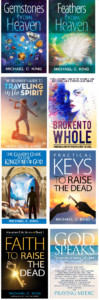
One example of a marketing fail in this area is my book The Gamer’s Guide to the Kingdom of God.  This almost three-hundred-page book took me over the course of three years to write, edit, and publish, and if God hadn’t dropped the book Gemstones From Heaven in my lap during that time, The Gamer’s Guide would have been my first book.  Gemstones sold well given my audience, so I expected The Gamer’s Guide would do the same—until I launched it and almost no one bought the book.  I will be honest, I was extremely disappointed when the launch fell flat on its face.  I had created a social media buzz in the days and weeks leading up to it, posted some interesting excerpts to draw people’s attention, and still didn’t get much of anywhere.  Why?

I had the wrong audience.

Only a small subset of people who are interested in supernatural manifestations are also interested in online gaming.  It’s a venn-diagram—that picture of two overlapping circles with that section in the middle representing where those two interests overlap.  The audience who loved my first book were mostly not gamers, and therefore didn’t see the relevance of the book to their lives, no matter how relevant I might believe it to be.  Once I began to connect with gamers, the book began to perform a little better, and most of the people who bought that book have raved about it.  The lesson there was “don’t assume you have a crossover audience.”  What you do for one subject may or may not work for another one, so go to where your audience is.

Marketing also means spending money.  For those who are leery about this (as many of us are at the outset), the saying “you have to spend money to make money” is true.  Just work on learning how to spend wisely.  You can put ads on social media, in search engines, or through various organizations who specialize in your subject matter.  You can put up a table at events, although again, preferably choose topic-relevant ones.  Having a book table at an electronics fair is not likely to perform well, even if the book is all about electronics.   Why?  People at that event are wanting things involving electricity, not paper.  It all comes down to honing in on what the audience for your subject matter wants, not what is easy for you.  If you can find a way to make it easy for you and meet your audience, much the better.

One final part of marketing is the book launch.  The launch itself can be done a number of ways, including limited-time giveaways, prize drawings (check with state laws regarding raffles and such), book trailers, scheduled interviews with radio programs and/or internet radio, a blog tour, book signings, and more.

One of the things people like at a book launch (or any time, really) is free stuff.  It doesn’t even have to be something they use; it needs to be something they think they might use someday, enough to catch their eye and push them over the edge to purchase the book.  On the other hand, prize drawings don’t work as well.  The chance of winning is less invigorating than a guaranteed-win for everyone who purchases within a certain timeframe.  The timeframe creates urgency which drives up sales, and the free gift also helps push people from the “considering” category into the “purchasing” category.  This is essentially an interest-grabber, and anything that gets someone to look at your book with interest is likely to be a good idea provided it is cost-beneficial.

At the end of the day, Content and Marketing are both the only two real problems a book can have in terms of sales, and they are the two things the author has significant influence over!  While we cannot force anyone to purchase our product, there are literally billions of people on the planet, and over one billion of them read English.  Of those 1,000,000,000+ people, there are more than enough who would want your book—but it’s your job to find them.  Get the content fixed, then make sure to get the right audience, the right message, and the right interest-grabbers, and your book sales will start shooting upward.

[/et_pb_text][et_pb_code admin_label=”Code”]<script type=”text/javascript” src=”https://app.getresponse.com/view_webform_v2.js?u=B40ZB&webforms_id=6653905″></script>[/et_pb_code][et_pb_comments admin_label=”Comments” show_avatar=”on” show_reply=”on” show_count=”on” background_layout=”light” use_border_color=”off” border_color=”#ffffff” border_style=”solid” custom_button=”off” button_letter_spacing=”0″ button_use_icon=”default” button_icon_placement=”right” button_on_hover=”on” button_letter_spacing_hover=”0″] [/et_pb_comments][/et_pb_column][/et_pb_row][/et_pb_section]

Privacy Preference Center